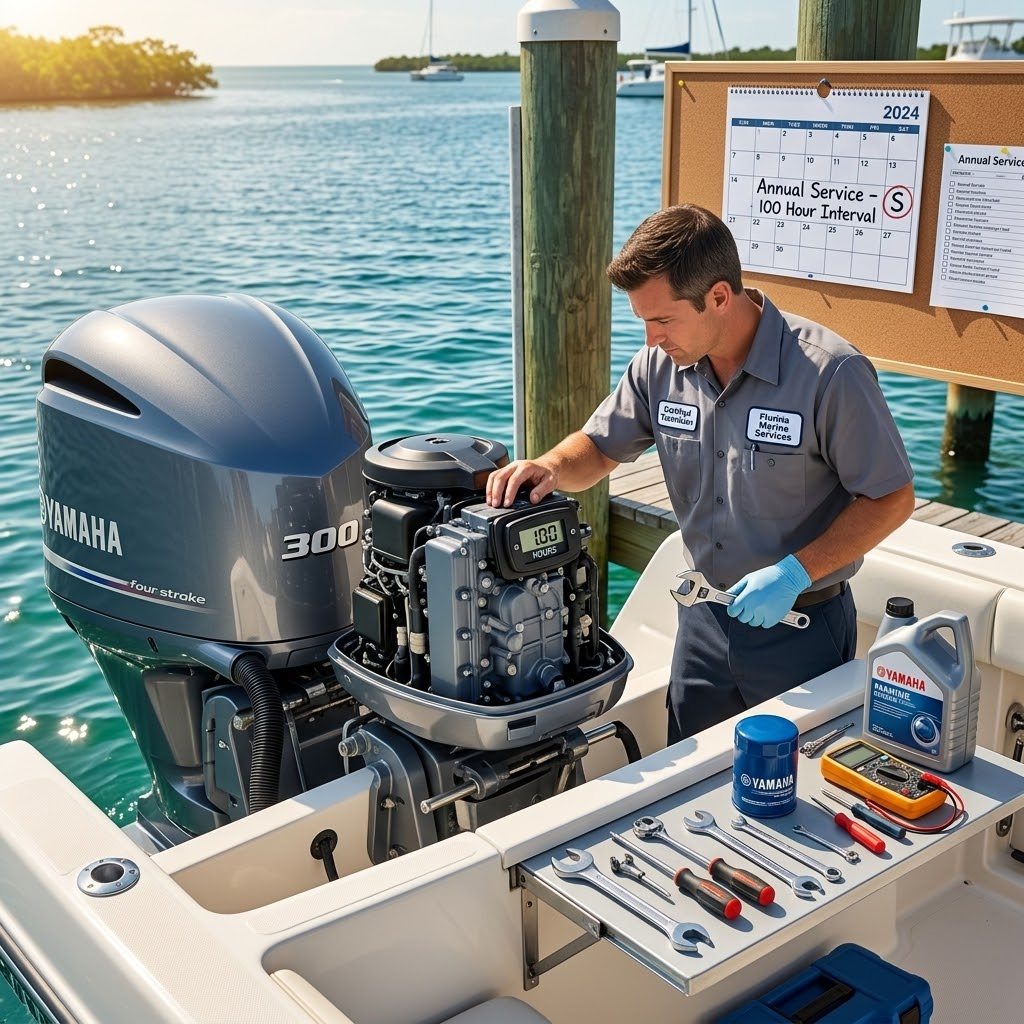
100-Hour Service vs Annual Service for Yamaha Outboards
100-Hour Service vs Annual Service: What Boat Owners Need to Know
For many Yamaha outboard owners in Brevard County, Florida, maintenance recommendations can feel confusing. The operator manual often mentions both 100-hour service intervals and annual service, and it is not always clear how the two relate. Understanding the difference helps you plan realistic, safe maintenance that supports reliability in local saltwater conditions.
This guide explains how 100-hour and annual service work together, what they typically include at a high level, and how Florida boating patterns influence your schedule. It is written for general education and is not a substitute for your specific owner's manual or advice from a certified marine technician.
Why Yamaha Outboard Service Intervals Matter
Yamaha designs outboards to operate in demanding marine environments. Saltwater exposure, heat, humidity, and frequent short trips all affect components such as fuel systems, cooling passages, and electrical connections. Routine service is intended to:
- Reduce the likelihood of unexpected breakdowns on the water
- Identify wear and corrosion before they become major problems
- Keep the engine operating within its intended temperature and load range
- Support proper lubrication and protect internal engine components
- Maintain alignment with Yamaha's maintenance recommendations
Intervals are usually given in engine operating hours (for example, every 100 hours) and in time (for example, once per year), because many parts are affected both by use and by age.
Defining 100-Hour Service vs Annual Service
What is a 100-Hour Service?
A 100-hour service is typically aligned to engine run time. If your boat accrues 100 hours of operation before a full year passes, service is generally recommended at that point. Key ideas behind the 100-hour interval include:
- Lubricants gradually lose protective properties with use
- Filters capture contaminants as fuel and oil circulate
- Wear items and adjustments can drift over periods of operation
- Saltwater exposure during use can accelerate corrosion on exposed components
The specific 100-hour checklist varies by model and year. Yamaha's official maintenance chart for your engine is the primary reference, and any service should be planned around that information.
What is an Annual Service?
Annual service is time-based. Even if you do not reach 100 hours of use, most outboards are designed to be inspected and maintained at least once every 12 months. This is important because some issues develop while the boat is sitting, such as:
- Corrosion from salt-laden air and humidity
- Fuel degradation, especially with ethanol blends
- Battery discharge and terminal corrosion
- Seals and rubber components aging over time
Annual service often overlaps with 100-hour tasks but may emphasize inspection, cleaning, and age-related items. It is intended to keep the engine and related systems in a serviceable state even when hours are relatively low.
Do You Need Both 100-Hour and Annual Service?
Many owners wonder if they are supposed to complete two separate services: one at 100 hours and one at the one-year mark. In practice, the recommendation is generally interpreted as:
Perform the recommended maintenance at the first of these events:
- Every 100 operating hours, or
- Once per year, whichever comes first
For example, if you log 110 hours in eight months, a full interval service is usually appropriate at that point. If you only log 40 hours during the year, annual service is still advised to address time-based wear and aging. Your Yamaha owner's manual is the definitive source for your particular engine, so always check the specific guidance for your model.
Typical Elements of a 100-Hour / Annual Service (High Level)
Because specific procedures can involve safety considerations, marine tools, and model-specific steps, detailed repair instructions are best left to qualified professionals. However, most 100-hour or annual services will generally focus on the following areas:
Engine Oil and Filtration
Lubrication is central to engine health. 100-hour and annual services commonly involve:
- Changing engine oil according to Yamaha specifications
- Replacing the engine oil filter
- Checking for signs of contamination or abnormal wear in the oil
Oil service is especially important in hot, humid coastal environments where engines may be run at varied loads and in shallow or warmer water.
Gearcase and Propeller Area
The lower unit and propeller area operate under high loads and are fully submerged in saltwater. Service often includes:
- Changing gearcase lubricant at the recommended interval
- Inspecting for water contamination in the lubricant
- Checking the propeller and shaft area for fishing line, damage, or corrosion
Internal gearcase repairs require specialized knowledge and tools. If abnormal findings are discovered, a certified marine technician can advise on next steps.
Fuel System and Filters
Modern outboards rely on clean fuel and correctly functioning fuel filtration. High-level checks during a 100-hour or annual visit may include:
- Inspecting and, if needed, replacing fuel filters and water-separating elements
- Checking for signs of water, debris, or phase separation in the fuel system
- Visually examining fuel lines and primer bulbs for cracking or deterioration
Fuel system disassembly and repair can be hazardous and is best handled by trained professionals. Boat owners can help by using clean fuel, following fuel storage guidance, and promptly reporting any hard-start, stalling, or power loss symptoms to a technician.
Cooling System Checks
Overheating is a common risk for any marine engine, particularly in sandy or shallow areas where intakes can become restricted. As part of scheduled service, technicians often:
- Check water pump performance indicators, such as tell-tale strength
- Inspect cooling passages externally where accessible
- Look for corrosion signs around thermostats and anodes
Internal cooling system work and water pump replacement involve disassembly that should be performed according to Yamaha procedures. Operating an engine that shows any sign of overheating is unsafe; shut down promptly and consult a marine technician.
Electrical and Charging System
Reliable starting and charging are essential for safe boating. A 100-hour or annual inspection usually includes:
- Checking battery condition, connections, and mounting
- Inspecting visible wiring for corrosion or damage
- Confirming that charging output is within the manufacturer's guidelines
Any sign of loose, overheated, or damaged wiring should be addressed by a qualified professional to reduce the risk of electrical faults.
General Inspection and Corrosion Control
Beyond engine internals, periodic service provides an opportunity to examine the boat and rigging more broadly. Typical high-level checks include:
- Inspecting external anodes and replacing them when needed
- Examining control cables and steering for smooth operation
- Checking engine mounting hardware and transom area
- Looking for corrosion, paint blistering, or loose fasteners
Saltwater use around Satellite Beach, the Indian River Lagoon, and offshore areas can accelerate corrosion, making these routine inspections especially relevant for local boaters.
How Your Boating Pattern Affects Service Timing
Two owners with the same engine model may require different service schedules, even if they both follow Yamaha's guidance. Factors that influence how you apply the 100-hour and annual framework include:
Hours of Use
High-usage owners, such as frequent anglers, may reach 100 hours well before the one-year mark. In that case, the hour-based interval drives the schedule. Lighter-use owners may rely primarily on the annual time-based service but should still track hours in case they increase usage mid-season.
Type of Water and Conditions
Regular operation in saltwater, brackish water, or areas with suspended sand and silt can increase wear on cooling and corrosion-protection systems. Boats stored on lifts or trailers may experience less continuous immersion than boats kept in the water, but both are exposed to salt air and humidity. These conditions underscore the importance of flushing according to Yamaha guidance and maintaining consistent service intervals.
Storage and Lay-Up Practices
Boats that spend periods out of the water or unused still benefit from annual service. Fuel stabilization, battery care, and corrosion checks are especially important when a boat sits for weeks or months at a time. For boats that run year-round in Florida, it can be helpful to select a consistent service month and plan around it, while still monitoring engine hours.
Owner Inspections vs Professional Service
Many Yamaha owners like to stay involved in basic care, such as rinsing, flushing according to the manual, checking engine oil levels, and monitoring propeller condition. These habits are valuable and can help you notice changes early.
At the same time, 100-hour and annual services often involve systems and safety considerations that are best handled in a professional shop setting. A certified Yamaha technician can:
- Use model-specific diagnostic tools and software
- Check for active or stored fault codes
- Apply Yamaha service bulletins and up-to-date procedures
- Document findings and maintenance performed for your records
Combining regular owner checks with scheduled professional service tends to provide a balanced approach to outboard care.
Planning Your Next Service in Brevard County
If you are unsure whether your Yamaha outboard is due for a 100-hour or annual service, a helpful first step is to review your hour meter, your last recorded service date, and the maintenance chart in your owner's manual. Make note of any operating symptoms such as hard starting, unusual noises, changes in tell-tale flow, or warning indicators, and share these with a marine technician.
For boaters in Satellite Beach and throughout Brevard County, working with a Yamaha-focused shop can provide guidance on appropriate service intervals for local conditions. A certified Yamaha Outboard Master Technician can review your usage pattern, inspect your engine, and help you build a realistic maintenance plan aligned with Yamaha recommendations and Florida's coastal environment. To discuss your outboard's service schedule or arrange an inspection, Contact Yamaha Outboard Specialist


