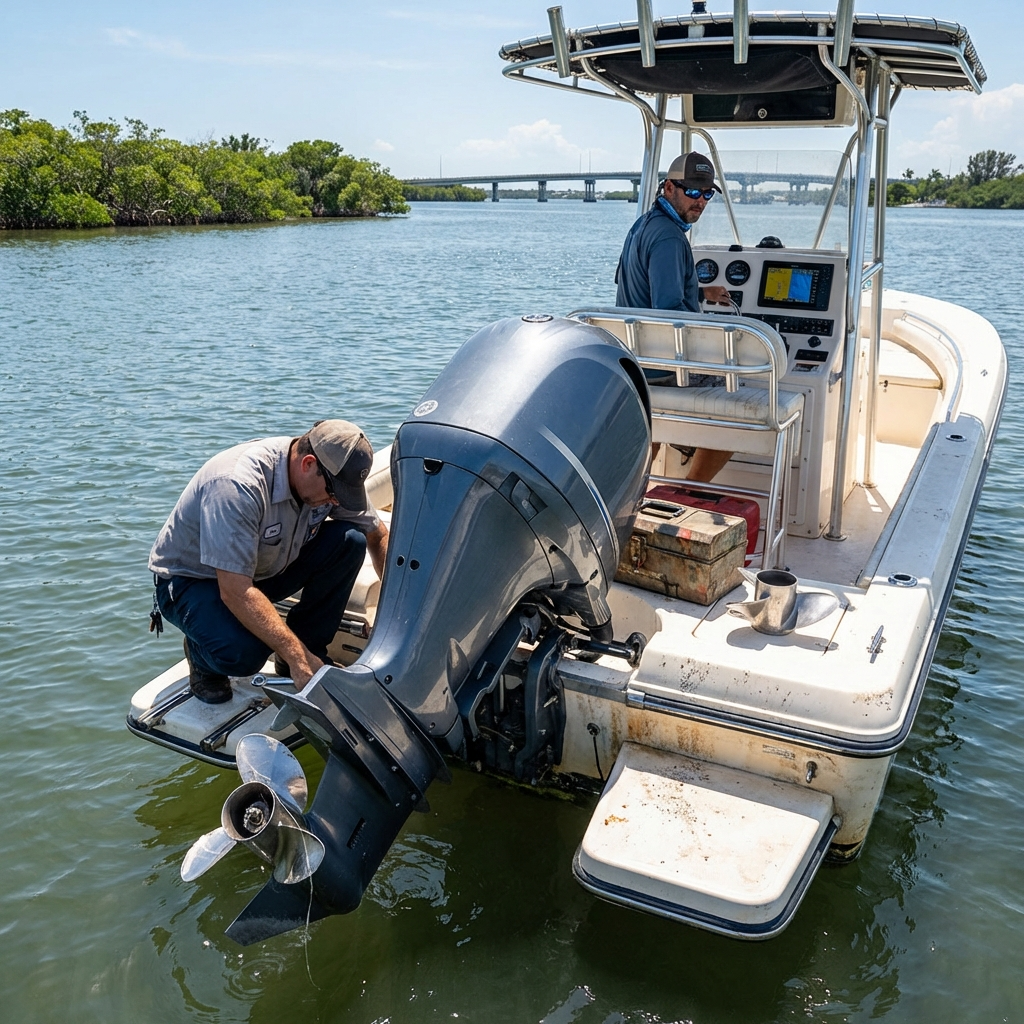
Boat Maintenance Tips for Brevard County, Florida Climates
Boat Feels Slower Than Usual: Propeller or Engine Problem?
A gradual or sudden loss of speed is one of the most common reliability complaints for outboard-powered boats. In Brevard County waters, year-round heat, humidity, and salt exposure can accelerate wear and make small issues show up quickly as reduced top speed, slower planing, or higher RPM with less push. The good news is that many speed-loss problems leave clear clues. The key is separating prop and running-gear causes (the boat cannot convert power into thrust) from engine and control causes (the outboard cannot make full power or cannot deliver it correctly).
This guide explains practical indicators to watch for, what information to record, and when it is safest to stop and have a Yamaha-certified marine technician inspect the system.
Start with the baseline: What exactly changed?
Before assuming a fault, compare today’s performance to a known normal setup. Speed on the water is affected by load, conditions, and setup. A boat can feel sluggish simply because it is carrying more weight, has more bottom growth, or is running in rougher seas.
Questions that narrow the problem quickly
- Did RPM change? If the engine reaches the same wide-open-throttle (WOT) RPM as usual but speed is down, that often points to extra drag (bottom growth, fouled prop) or propeller slip. If RPM is down too, an engine, fuel, or control issue becomes more likely.
- Is planing harder? Longer time to get on plane can indicate a damaged or ventilating prop, incorrect trim, extra weight aft, waterlogged foam, or reduced engine output.
- Is the issue constant or intermittent? Intermittent speed loss can be consistent with ventilation, a slipping hub, fuel restriction, overheating protection, or an electronic throttle/shift issue depending on the model.
- Any alarms or warning lights? Never ignore Yamaha warning indicators. An overheat or low oil pressure condition may cause the engine to limit power to protect itself.
- What changed recently? Prop swap, hitting an object, fuel fill-up, storage time, battery replacement, or maintenance work can all be relevant.
Clues that point to a propeller or running-gear problem
Prop-related problems typically show up as the engine revving normally (or even higher than normal) while the boat speed and acceleration fall off. You may also notice vibration, unusual noise, or inconsistent bite in turns.
Common prop and lower-unit related causes
- Propeller damage: Bent blades, missing cup, or nicks can reduce thrust and increase slip. Even small deformities can matter, especially on higher-horsepower setups.
- Fishing line on the prop shaft: Line can work past seals and create drag, and it may contribute to seal damage over time. If you suspect line, treat it as a reason to have the area inspected promptly.
- Spun hub: Many props use a hub system designed to slip under impact. A hub that has started to fail can feel like the engine is working but the boat is not moving as it should, often worsening as load increases.
- Ventilation (prop sucking air): This can happen with aggressive trimming, sharp turns, heavy chop, or incorrect engine height. Ventilation often feels like a sudden RPM flare with reduced push.
- Excess drag: Bottom growth, damaged hull surfaces, stuck trim tabs, or a partially deployed anchor can all steal speed. In Florida saltwater, marine growth can build quickly and affect performance noticeably.
- Trim and setup changes: A trim system issue, incorrect trim technique, or shifting weight distribution can prevent the hull from riding efficiently.
What you can safely check and document
For safety, keep checks non-invasive and avoid working near a running engine or in rough conditions. With the engine off and the boat secured, you can typically document:
- Visible prop condition: Look for bent blades, cracks, missing chunks, or heavy barnacle growth.
- Vibration notes: Record whether vibration is felt in the steering wheel, deck, or seat, and at what RPM range it appears.
- RPM vs GPS speed: A simple note like 5200 RPM, 28 mph GPS provides a valuable clue for diagnosing prop slip and load.
- Trim behavior: Note if trim changes no longer affect speed like they used to, or if the boat porpoises or struggles to lift.
Clues that point to an engine, fuel, or control issue
Engine-related speed loss often includes reduced maximum RPM, rough running, hesitation, increased smoke (model dependent), poor idle quality, or alarms. Another pattern is a boat that will not reach normal RPM even with lighter load and calm water.
Common engine-side causes of reduced speed
- Fuel quality or restriction: Water in fuel, stale fuel, clogged filters, or a restricted pickup/vent can limit power. Ethanol-blended fuel can contribute to phase separation when water contamination occurs.
- Ignition or sensor issues: Misfires, weak spark, or sensor faults can reduce power and may trigger warning modes depending on the condition.
- Overheating or cooling concerns: An engine that is running hot may reduce power to protect itself. This can be accompanied by alarms or a change in telltale flow, but not every cooling issue is obvious.
- Air leaks or intake restrictions: Loose clamps or restricted air flow can affect performance. Some issues are subtle and require diagnostic tools to confirm.
- Throttle/shift control problems: Cable adjustment issues (on mechanical controls) or electronic throttle faults (on digital systems) can prevent full throttle opening even if the helm lever is pushed forward.
- Propeller pitch mismatch after a change: If a new prop is too tall in pitch, the engine may lug, lowering RPM and speed. Too low in pitch may allow high RPM without efficient speed.
Warning signs that justify stopping and seeking service
Reduced speed is sometimes the first sign of a condition that can lead to damage. It is generally safest to stop troubleshooting and consult a technician if you notice:
- Any engine alarm, warning light, or message
- Steam, burning smell, or unusual heat
- Sudden loss of power that does not clear
- Severe vibration or grinding sounds
- Fuel smell in the bilge or around the engine
Do not bypass alarms or continue running at high load if an overheat or oil pressure warning is suspected. Limiting operation and arranging a proper inspection helps reduce the risk of secondary damage.
Prop vs engine: Quick comparison using RPM and behavior
One of the simplest ways to separate categories is to compare how the engine behaves versus how the boat moves.
If RPM is normal (or higher) but speed is down
This pattern often suggests the engine is producing power, but thrust is being lost to slip, ventilation, or drag. Typical suspects include prop damage, a spun hub, heavy growth, or an inefficient trim/weight condition.
If RPM is lower than normal and speed is down
This points more toward the engine not making full power or not reaching full throttle. Fuel delivery problems, ignition issues, overheating protection, or control/linkage issues are common categories to evaluate with diagnostic testing.
If RPM suddenly flares and then catches again
That can indicate ventilation or a hub beginning to slip. It can also occur with some fuel delivery issues, but the RPM flare feel often sends technicians to inspect the prop and hub early in the process.
What to record before you call for service
A short set of notes can speed up diagnosis and may reduce repeat water tests. When safe to do so, write down:
- Engine model and horsepower (and approximate hours if known)
- Normal performance numbers (typical WOT RPM and GPS speed in average conditions)
- Current numbers (RPM, GPS speed, fuel level, passenger/gear load)
- Conditions (sea state, wind, current, water depth, and whether the boat was trimmed differently)
- Recent events (impact, prop change, fuel fill-up, long storage, maintenance)
- Symptoms (vibration, alarms, rough idle, hesitation, smoke, hard starting)
If your Yamaha display or gauge system shows fault codes or history, note what you see. Avoid clearing codes before a technician can review them, since stored information can help pinpoint intermittent issues.
Preventive habits that help avoid speed loss
Many performance issues are preventable with consistent inspection and maintenance habits, especially in saltwater environments.
- Inspect the prop regularly: Check for dings, fishing line, and growth. Address damage early to avoid vibration and efficiency loss.
- Keep up with scheduled maintenance: Routine service helps ensure filters, spark components (model dependent), and cooling systems are in good condition.
- Use clean, fresh fuel: Keep tanks maintained, follow fuel stabilizer guidance when storing, and replace water-separating filters on schedule.
- Monitor WOT RPM range: Yamaha outboards are designed to operate within a specified WOT RPM band. Consistently running below that range can indicate excess load, prop mismatch, or an engine issue that deserves attention.
- Maintain hull and running surfaces: Bottom cleanliness and properly functioning trim tabs can make a noticeable difference in efficiency.
When professional diagnostics are the right next step
Because several different faults can produce similar symptoms, accurate diagnosis often requires a combination of visual inspection, prop evaluation, fuel system checks, and Yamaha-specific electronic diagnostics. This is especially important when there are alarms, reduced maximum RPM, or repeated performance changes that return after temporary improvement.
If your boat feels slower than usual and you want a safe, methodical evaluation, Yamaha Outboard Specialist in Satellite Beach can help with inspections, diagnostics, and maintenance planning for Yamaha outboards in Brevard County. Contact Yamaha Outboard Specialist


