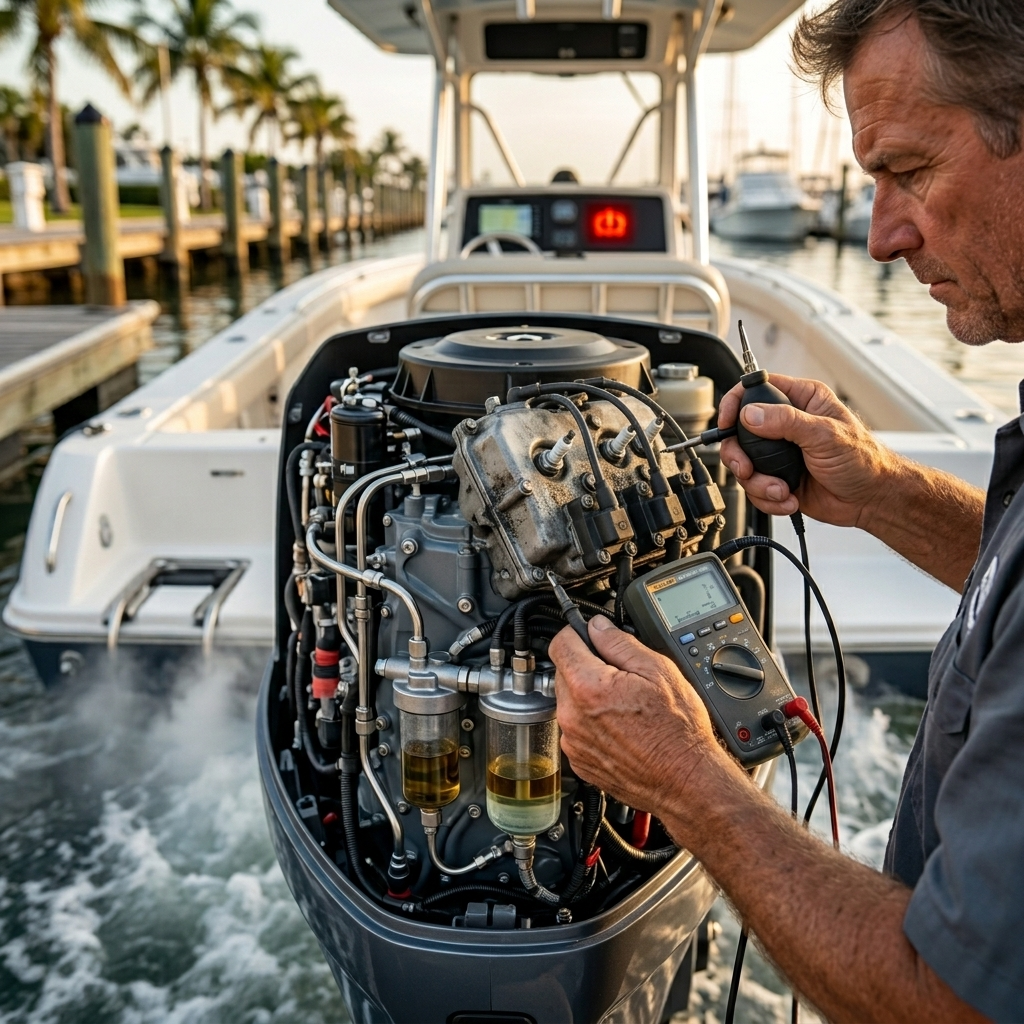
Boat Runs Fine at Idle but Struggles Under Load
Boat Runs Fine at Idle but Struggles Under Load: Fuel Issue?
Many boat owners experience a situation where the outboard starts easily, idles smoothly at the dock, but then stumbles, bogs, or cannot reach normal speed once the boat is underway. It is natural to suspect a fuel problem first, but there are several systems that can cause similar symptoms.
This article provides a general, safety-focused overview of why an engine may run well at idle but struggle under load, with an emphasis on Yamaha outboards operated in coastal Florida conditions. It is not a substitute for hands-on diagnostics by a qualified marine technician.
What Runs Fine at Idle, Struggles Under Load Really Means
When boaters describe this issue, they often notice one or more of the following:
- The engine starts normally and idles smoothly in neutral.
- As throttle is advanced, the engine hesitates, bogs, or feels weak.
- The boat may have trouble getting on plane or never reaches normal cruising RPM.
- There may be occasional surging or brief recovery in power.
- In some cases, alarms or warning lights may appear, and the engine may limit RPM.
These symptoms are usually most obvious when the engine is under load, which is when it is pushing the boat through the water. Higher load demands more fuel, more air, and more ignition energy, and it also generates more heat. Any weakness in these systems becomes more noticeable.
Is It Always a Fuel Problem?
Fuel problems are common in marine environments, especially in humid coastal areas like Brevard County, but they are not the only cause. Issues in the following systems can all cause power loss under load while allowing the engine to idle reasonably well:
- Fuel delivery system (tank, lines, filters, pumps, injectors or carburetors)
- Ignition system (spark plugs, coils, wiring, timing controls)
- Air intake and exhaust (restricted airflow, exhaust blockage)
- Engine management and sensors (ECM/ECU inputs such as temperature and throttle position)
- Mechanical condition (compression, internal wear, propeller issues, hull drag)
Because these systems interact, it is important to avoid assumptions. Careful observation and professional diagnostics reduce the risk of replacing parts unnecessarily or overlooking a safety-related problem.
Common Fuel-Related Causes of Power Loss Under Load
Fuel system issues are a frequent contributor, especially when an outboard is run in saltwater environments and stored for periods between trips. Below are high-level explanations of common fuel-related causes. Any inspection or repair that involves fuel, pressurized lines, or disassembly should be handled cautiously, and complex work is best left to a certified marine technician.
1. Fuel Quality and Contamination
Modern gasoline can degrade over time, and in humid coastal areas, moisture and potential phase separation can create inconsistent fuel quality. Even when the engine idles, a mild fuel quality issue may not be obvious. Under load, however, contaminated or low-quality fuel can limit power.
General warning signs include:
- Fuel that has a strong, sour, or varnish-like odor.
- Visible debris or discoloration in pre-filters or clear inspection bowls.
- History of long storage periods without stabilizer.
To reduce the risk of fuel-related issues, many boat owners choose to:
- Use fuel from reputable, high-turnover marinas or stations.
- Follow Yamaha and fuel supplier guidance on ethanol content and storage.
- Use stabilizer when fuel will sit for extended periods.
If you suspect contaminated fuel, it is wise to stop operating the boat and consult a marine service professional. Fuel handling and disposal should follow local regulations and safety guidance.
2. Restricted Fuel Flow
An outboard may idle on a limited fuel supply, but once you advance the throttle, a restriction can prevent adequate flow. Common restriction points include:
- Clogged or waterlogged fuel/water separating filters.
- Debris in the tank pickup or anti-siphon valve.
- Kinked, collapsing, or deteriorated fuel hoses.
- Faulty primer bulb that does not stay firm when the engine is running.
At idle, fuel consumption is relatively low, so a partially restricted system may still deliver enough fuel. Under load, the restriction becomes more apparent, and the engine may start to bog or lose RPM.
Visual checks for crushed hoses, leaks, or severely aged components can be helpful, but deeper testing of fuel pressure and flow should be left to a qualified technician with the right tools and protective equipment.
3. High-Level Considerations for Filters and Injectors
Fuel filters and, on fuel-injected outboards, injectors play an important role in delivering clean, properly atomized fuel. Over time, contaminants can collect in filters and on injector tips.
Potential indicators of a filter or injector-related issue include:
- Noticeable loss of power at higher RPM.
- Uneven running, especially under steady throttle.
- Improved performance right after fuel system service, followed by gradual decline.
Because fuel systems can be pressurized and gasoline is flammable, owners should avoid opening the system or attempting do-it-yourself cleaning methods that are not approved by the manufacturer. Yamaha service information provides model-specific guidance that trained technicians can apply safely.
Other Systems That Can Mimic Fuel Problems
Not all fuel-like symptoms are caused by the fuel system. Several other issues can feel similar from the helm.
1. Ignition System Weakness
At idle, the ignition system does not have to work as hard as it does at higher RPM and under load. Weak spark, worn plugs, or marginal coils may tolerate idle, then break down when cylinder pressures rise.
General signs that may suggest an ignition-related issue include:
- Misfire or spitting sound when throttling up.
- Intermittent loss of power that comes and goes suddenly.
- Visible arcing at night or in dark conditions around ignition components (inspection only from a safe distance and with appropriate precautions).
Replacing spark plugs at manufacturer-recommended intervals and having the ignition system evaluated during scheduled service can help prevent many load-related problems.
2. Overheating and Protection Modes
Outboards are designed with protective strategies to help reduce the risk of damage when abnormal conditions occur. If coolant flow is compromised or temperatures rise, the engine control module may reduce power or limit RPM.
In some cases, this can feel like a fuel issue because the engine will not accelerate normally. Typical warning signs include:
- Audible alarms or warning indicators on the gauge cluster.
- Steam or unusually hot water from the telltale (if equipped).
- Noticeable loss of power that coincides with alarms or hot conditions.
Owners should never ignore warning lights or alarms. Running an engine that is in a protection mode can lead to more serious damage. Manufacturer guidelines and a qualified technician should be consulted whenever protection strategies are suspected.
3. Propeller, Gearcase, and Hull-Related Factors
Even when the engine itself is healthy, the load placed on it may be higher than expected. Conditions that can contribute to excess load include:
- Damaged or heavily fouled propeller.
- Incorrect propeller pitch for the boat and engine combination.
- Marine growth on the hull, running surfaces, or gearcase.
- Carrying significantly more weight or gear than usual.
These factors can make it difficult for the engine to reach its recommended wide open throttle (WOT) RPM range. A lower-than-normal WOT RPM can feel like the engine is weak or starved for fuel, even when the fuel system is functioning correctly.
Preventive Maintenance Habits for Reliable Performance
Many of the issues that show up as power loss under load develop gradually. Consistent, preventive maintenance can help reduce the likelihood of sudden problems on the water.
Routine Checks Before Each Trip
Before departing, many owners find it helpful to perform a quick, high-level walk-around and basic checks, such as:
- Verifying that the fuel level is suitable for the planned trip with a safety margin.
- Inspecting for obvious fuel leaks, strong fuel odors, or damaged hoses.
- Confirming the primer bulb firms up and stays firm after priming.
- Checking that the propeller is securely installed and free from obvious damage.
- Ensuring the cooling water telltale is flowing normally once the engine is started.
These checks do not replace scheduled service, but they can help identify visible concerns before leaving the dock.
Scheduled Service and Yamaha-Specific Guidance
Yamaha publishes maintenance schedules and service procedures for each outboard model. Following these recommendations helps keep key systems, including fuel and ignition, in better condition. Typical scheduled services may focus on:
- Replacing engine and external fuel filters at recommended intervals.
- Inspecting and replacing spark plugs and ignition components as needed.
- Checking fuel lines, primer bulbs, and connections for age-related deterioration.
- Inspecting the propeller and gearcase for damage, seal condition, and proper lubrication.
- Reviewing engine diagnostic data and any stored fault codes.
Because Yamaha models and usage patterns vary, a certified Yamaha technician can help tailor a preventive maintenance plan to your engine, hours, and local operating environment.
When to Stop Troubleshooting and Call a Professional
If your boat runs well at idle but struggles to accelerate or stay on plane, it is important to prioritize safety. Continuing to operate an engine that is misfiring, overheating, or showing signs of significant power loss can lead to further mechanical issues or leave you stranded.
In general, it is wise to stop troubleshooting on your own and consult a marine professional when:
- Warning lights, alarms, or error codes appear.
- There are visible fuel leaks, strong fuel odors, or fuel system damage.
- The engine suddenly loses a large amount of power.
- You notice unusual noises, vibration, or knocking.
- You are unsure whether it is safe to continue running the engine.
Certified Yamaha technicians have access to model-specific diagnostic tools and manufacturer service information to evaluate fuel, ignition, cooling, and electronic systems in a structured and safe way.
Outboard Performance Support in Brevard County
Boat owners in Brevard County, Florida, operate in a demanding marine environment that combines saltwater, heat, and frequent use. These conditions can accelerate wear in fuel, ignition, and cooling systems, especially if regular maintenance is delayed.
Yamaha Outboard Specialist in Satellite Beach focuses on Yamaha outboard diagnostics, performance concerns, and preventive maintenance. If your engine idles smoothly at the dock but struggles under load, a structured inspection can help identify whether the cause is fuel-related or involves another system.
For questions about symptoms, maintenance intervals, or diagnostic options for your Yamaha outboard in the Brevard County area, you can reach out for professional assistance. Contact Yamaha Outboard Specialist


