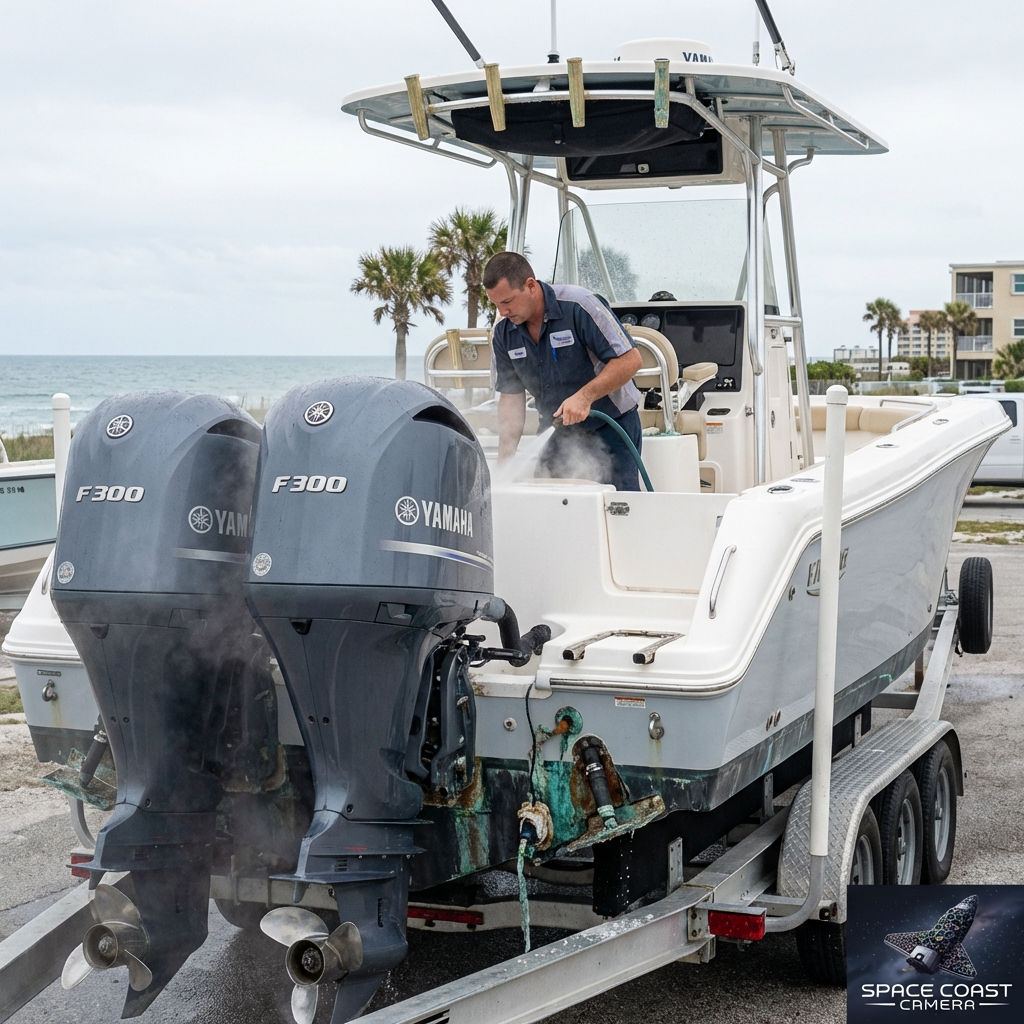
How Salt Air and Saltwater Affect Boats in Satellite Beach
How Salt Air and Saltwater Affect Boats in Satellite Beach
Boating around Satellite Beach and the central Florida coast is rewarding, but the environment is tough on boats. Salt in the air and saltwater exposure can accelerate corrosion, increase electrical resistance, dry out seals, and shorten the service life of components that would last longer in freshwater. Understanding what salt does, where it causes the most trouble, and what habits reduce damage can help owners keep their boats reliable and safer to operate.
Why the coastal environment is harder on boats
Saltwater is an electrolyte, meaning it helps electricity flow. When saltwater or salty moisture sits on metal parts, it speeds up electrochemical reactions that remove material from metals, especially when different metals are connected. In addition, coastal humidity keeps surfaces damp longer, and salt crystals can remain after water evaporates. Those crystals attract moisture again, creating a cycle of wetting and drying that continuously feeds corrosion.
Salt air matters even when the boat is on a trailer or lift. Wind-driven spray and airborne salt can settle into tight spaces, under cowls, behind panels, and inside connectors. Over time, that residue can lead to problems that appear intermittent, such as a warning horn that comes and goes or a starter that works one day and not the next.
Common boat systems affected by salt exposure
Outboards and external engine hardware
Outboards operate in the highest-risk zone: they are routinely splashed, cooled with raw water, and exposed to salt-laden air between trips. Corrosion can appear on external fasteners, brackets, steering components, and around mounting hardware. In severe cases, corrosion can make routine service more difficult because bolts seize or heads deteriorate.
For Yamaha outboards and other brands, it is important to treat corrosion as a reliability and safety issue, not just a cosmetic one. Heavily corroded components can affect steering effort, trim operation, and the integrity of electrical grounds.
Electrical systems and connectors
Salt deposits and moisture increase resistance at connections. Even a small increase in resistance can cause voltage drop, leading to slow cranking, erratic gauge behavior, sensor faults, and charging complaints. Many mystery electrical problems trace back to corroded connectors, poor grounds, or battery cable ends that have wicked in moisture.
Owners often notice these symptoms first:
- Intermittent starting or a single click when turning the key
- Dash electronics rebooting during cranking
- Trim/tilt working only sometimes
- Random warning tones or indicator lights
- Corrosion on battery posts or green/white buildup on cable ends
Because marine electrical systems involve high current (starting circuits) and critical safety functions, any cleaning, re-termination, or troubleshooting should be done carefully and in accordance with manufacturer guidance. If a connection is hot to the touch, shows melted insulation, or repeatedly blows fuses, it is a good sign to have a qualified marine technician inspect the system.
Cooling passages and raw-water exposure
Saltwater leaves deposits as it dries. Over time, mineral and salt buildup can restrict cooling flow, and marine growth can affect intakes. Reduced cooling performance can contribute to overheating and can also cause sensors to report abnormal readings. Because cooling-system service can involve disassembly and correct torque/sealing practices, it is typically best handled by a certified technician when symptoms are present.
Warning signs that merit prompt attention include a persistent overheat alarm, reduced water telltale flow, steam, a burning smell, or an engine that goes into protective mode. Do not operate a boat if you suspect overheating, as additional running can increase the risk of damage.
Steering, controls, and moving hardware
Salt exposure dries out protective films and can creep into cable ends, pivot points, and linkages. This can raise friction and lead to stiff steering or sticky throttle/shift operation. These issues are more than inconvenient: control smoothness affects docking control, maneuvering in currents, and overall safety.
If steering effort changes noticeably or the wheel does not return smoothly, schedule an inspection. Avoid forcing controls; increased resistance can indicate corrosion, binding, or a component nearing failure.
Trailer and lift components
In coastal areas, trailers often corrode faster than owners expect, especially around brakes, hubs, leaf springs, fasteners, wiring, and lighting connections. Saltwater intrusion into hubs and brake systems can lead to premature wear and can create safety concerns on the road.
Look for rust trails, cracked brake lines, uneven tire wear, or lights that work intermittently. Trailer maintenance is an important part of boating reliability even though it is not part of the engine itself.
How corrosion starts: galvanic and crevice corrosion
Two common corrosion patterns show up on coastal boats:
- Galvanic corrosion: occurs when two different metals are electrically connected in the presence of an electrolyte (saltwater). The less noble metal tends to corrode faster. Sacrificial anodes are designed to corrode instead of critical components, but they must be correct for the water type and replaced when depleted.
- Crevice corrosion: occurs in tight gaps where moisture and salt sit with limited oxygen exchange, such as under clamps, washers, gaskets, or beneath deposits. These areas can corrode aggressively while nearby surfaces look fine.
Because these mechanisms can be hidden, routine inspections matter. Catching corrosion early can prevent secondary issues like loosened grounds, seized fasteners, or compromised hardware.
Practical habits that reduce salt damage
You cannot remove salt from the environment, but you can reduce how long it stays on your boat and how deeply it penetrates. The goal is consistent, low-risk prevention.
Rinse and dry with intent
A gentle freshwater rinse after each saltwater outing helps dissolve and remove salt deposits. Pay attention to areas where salt collects: transom brackets, steering components, the outside of the outboard, and any exposed hardware. After rinsing, allowing the boat to drain and dry reduces the time salty moisture remains on surfaces.
Avoid high-pressure spraying into seals, vents, or electrical areas, as forcing water where it does not belong can create new problems. If you are unsure where water should or should not go on your specific outboard model, follow the manufacturer’s guidance.
Use corrosion prevention products appropriately
Marine corrosion inhibitors can help protect metal surfaces, especially in areas exposed to salt air between trips. These products are not a substitute for rinsing, and they must be applied in a way that does not contaminate belts, friction surfaces, or sensors. For owners who prefer a professional approach, a service visit can include a corrosion-risk inspection and recommendations appropriate to the boat’s usage pattern.
Inspect anodes and bonding
Anodes are consumable by design. If they are heavily depleted, missing, painted over, or incorrect for your environment, the protection they provide is reduced. It is also important that anodes have clean contact and are not electrically isolated by coatings or heavy scale. If you keep a boat in the water, stray current issues from marina wiring or onboard faults can accelerate corrosion, so unusual anode consumption is worth investigating.
Keep batteries and terminals clean
Battery health and clean connections are essential for modern outboards that rely on sensors, fuel delivery control, and charging systems. In salty environments, terminal corrosion can develop faster. If you see buildup, loose clamps, or swollen cable insulation, plan for a proper inspection and corrective service.
Store smart in coastal conditions
Even on a trailer, salt air can settle on your boat. Simple storage practices help:
- Use a well-fitting cover that allows ventilation to reduce trapped humidity
- Park with drainage in mind so water does not pool in compartments
- Periodically open compartments to air out and check for moisture
- Rinse the trailer and wheels after use near saltwater
What to tell a technician when you suspect salt-related issues
Clear, specific information speeds up diagnostics and helps avoid repeated trips for intermittent problems. Consider noting:
- Whether the boat is stored on a lift, trailer, or in the water
- How often you run in saltwater and whether you rinse after trips
- Any recent electrical symptoms (slow crank, resets, alarms)
- Changes in steering or control feel
- Visible corrosion locations and how quickly they are progressing
- Any recent accessory installations (radios, pumps, lighting) that might affect wiring and grounds
Salt-driven issues often involve multiple small contributing factors, so a full-system inspection can be more productive than addressing a single symptom in isolation.
Maintenance planning for Florida coastal use
Manufacturer schedules are a baseline, but salt exposure can justify more frequent inspections of corrosion-prone areas. A reasonable approach is to pair routine service intervals with seasonal checks, especially before long runs or heavy-use months. Preventive maintenance is less about doing everything early and more about catching small issues before they impact reliability.
For Yamaha outboards in particular, correct service procedures and genuine or equivalent-quality parts help maintain intended corrosion resistance and proper fit. When fasteners, gaskets, and protective coatings are restored properly, components are more likely to resist the salt environment.
When to stop and seek professional help
Salt-related problems can escalate from minor to serious if ignored. Do not continue operating if you observe overheating alarms, strong fuel odors, smoke, repeated electrical failures, or severely stiff controls. These can indicate conditions that affect safety on the water. If corrosion is advanced around critical hardware or wiring, a qualified marine technician can assess what needs cleaning, repair, or replacement and help you plan maintenance that fits how you use your boat.
If you boat in and around Satellite Beach and want help evaluating corrosion risks, setting up a preventive maintenance plan, or diagnosing salt-related performance and electrical concerns, Contact Yamaha Outboard Specialist


