How to Tell If Water May Be in Your Boat’s Fuel
How to Tell If Water May Be in Your Fuel
Water in a boat’s fuel system is a common cause of performance issues and unexpected breakdowns, especially in coastal environments like Brevard County, Florida. Salt air, humidity, and frequent temperature changes can all contribute to moisture intrusion. Recognizing the warning signs early and responding safely can help protect your Yamaha outboard and reduce the risk of more serious damage.
Why Water in Fuel Is a Concern for Yamaha Outboards
Modern Yamaha outboards are designed with precise fuel delivery and electronic controls. Even a relatively small amount of water in the fuel can affect how the engine runs. Over time, repeated exposure to contaminated fuel may contribute to corrosion, injector problems, and reduced reliability.
Boat fuel systems can be exposed to water from several sources, including tank condensation, loose fuel tank caps, contaminated marina fuel, or water intrusion during rough conditions. Because fuel and water do not mix, water tends to collect at low points such as the bottom of the fuel tank or the fuel/water separator.
Common Warning Signs of Possible Water in Fuel
Only a qualified marine technician can fully diagnose fuel system issues, but many boat owners first notice changes in how the engine behaves. The following symptoms may indicate that water could be present in the fuel system.
1. Hard Starting or Failure to Start
If your Yamaha outboard suddenly becomes difficult to start, especially after the boat has been sitting, contaminated fuel may be one of several possible causes. Water in the fuel can interfere with normal combustion and reduce the engine’s ability to ignite the mixture.
Hard starting can also result from other issues, such as electrical problems, battery condition, or ignition components. Because the causes can overlap, ongoing or sudden starting difficulties are a reason to have the engine inspected by a qualified technician.
2. Rough Idle or Stalling at Low Speed
An outboard that idles roughly, surges, or stalls when shifting into gear may be experiencing inconsistent fuel delivery. When water reaches the fuel rail or injectors, combustion can become uneven, leading to:
- Intermittent misfires at idle
- Engine shaking or vibration at low RPM
- Unexpected stalling when shifting into gear or maneuvering at the dock
Because low-speed control is critical for docking and close-quarters handling, any repeated stalling should be addressed promptly for safety.
3. Loss of Power or Hesitation Under Load
A Yamaha outboard affected by water in the fuel may feel sluggish when accelerating or may not reach expected RPM at wide-open throttle. You might notice:
- Hesitation or bogging when pushing the throttle forward
- Difficulty getting the boat on plane
- Inconsistent power, where the engine surges and then drops off
These symptoms can also arise from propeller, hull, or ignition issues, but contaminated fuel is a common contributor that should be considered, especially if the problem started soon after refueling or after rough conditions.
4. Engine Alarm or Warning Indicators
Many Yamaha outboards are equipped with warning systems and, in some cases, sensors in the fuel/water separator. If the system detects certain fault conditions, you may see warning lights, hear audio alarms, or notice the engine entering a protective limp or reduced-power mode.
Boat owners should never ignore alarms or warning lights. Always refer to the Yamaha owner’s manual for your specific model to understand what each indicator means. If fuel contamination is suspected, avoid continued operation at high speed and arrange professional inspection.
5. Visible Water in Fuel/Water Separator or Filter Bowl
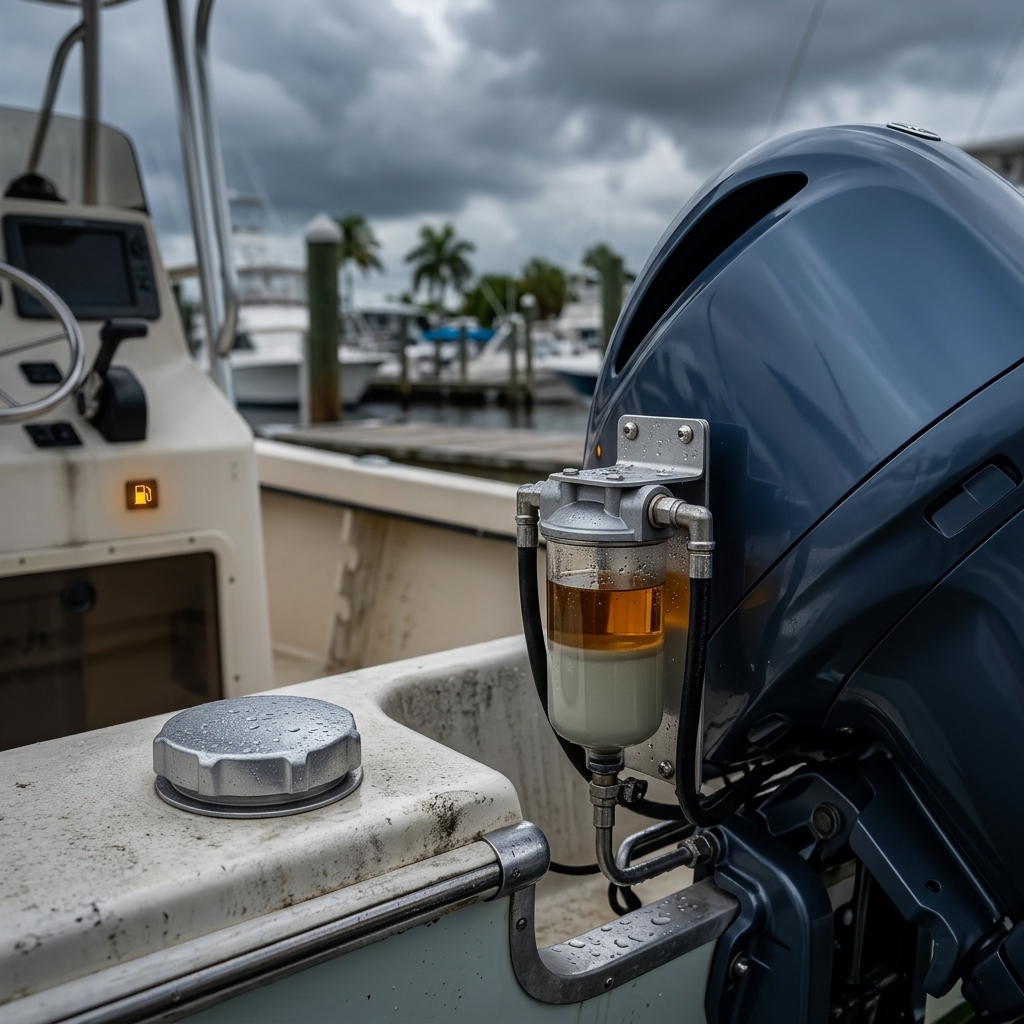
Many boats use a clear or semi-clear fuel/water separator bowl as part of the filtration system. Under safe conditions with the engine off, some owners may visually check this bowl for separation layers. Because water is heavier than gasoline, it can sometimes be seen as a distinct layer at the bottom of the bowl.
Any apparent water accumulation is a reason to take the situation seriously. For safety, removal or servicing of fuel filters and separators should follow manufacturer instructions and is often best handled by a marine professional, especially if you are not familiar with fuel system components.
6. Corrosion or Rust Around Fuel Components
Chronic moisture or water intrusion may contribute to visible corrosion around fuel fittings, metal filter housings, or fuel tank components. While surface corrosion alone does not confirm water in the fuel, it is a sign that the fuel system and surrounding structure are in a high-moisture environment and warrant closer inspection.
Conditions That Increase the Risk of Water in Fuel
Understanding when fuel contamination is more likely can help you decide when to be especially alert for symptoms and prioritize preventive steps.
After Heavy Rain or Rough Conditions
Boats stored outdoors, or those that experience frequent spray and pounding in rough seas, may face increased risk of water intrusion through deck fills, vents, or loose fittings. If you notice new performance issues soon after such conditions, fuel contamination is one of several possibilities to discuss with a technician.
Long Periods of Storage
Extended storage, especially in humid, warm climates, can allow condensation to form on the interior surfaces of fuel tanks. Over time, this moisture can collect at the bottom of the tank. Boats that sit with partially filled tanks are generally more vulnerable to this form of water accumulation.
Fueling from Questionable or Infrequent Sources
Not all fuel sources maintain the same standards or turnover rate. Fuel that has been stored for long periods or in poorly maintained tanks can be more prone to moisture and particulate contamination. If performance problems follow fueling at a new or infrequently used source, mention this detail when you speak with a marine technician.
What to Do If You Suspect Water in Your Fuel
If you believe your Yamaha outboard may be affected by water in the fuel, the priority is to protect safety and prevent further potential damage. The following high-level steps are for general awareness only and are not a substitute for professional service.
Operate Conservatively and Prioritize Safety
If performance changes suddenly while underway, reduce speed, monitor engine behavior closely, and avoid unnecessary high-RPM operation. If the engine runs erratically, stalls repeatedly, or alarms activate, it may be safer to return to port at reduced speed if conditions allow.
Do not attempt on-water fuel system disassembly or open fuel lines. Working with gasoline on a moving vessel presents fire and injury risks. Focus instead on getting to a safe location and arranging proper diagnosis.
Document the Symptoms for Your Technician
When you schedule service, it is helpful to provide clear information about what you experienced, such as:
- When the issue started (for example, right after refueling or after heavy weather)
- Engine RPM when problems occur (idle, midrange, wide-open throttle)
- Any warning lights, alarms, or error messages displayed
- Fuel source and date of last fill-up
This information can assist a Yamaha-certified technician in narrowing down potential causes, including possible water contamination.
Avoid Adding Unapproved Additives as a Quick Fix
There are many fuel additives marketed to absorb or remove water. Some products may be appropriate when used strictly according to manufacturer guidance, but additives are not a substitute for proper diagnosis, draining, or cleaning when significant contamination is present.
Using incompatible additives or combining multiple treatments without guidance can create additional variables and may not resolve the underlying issue. When in doubt, consult a marine professional familiar with Yamaha systems before introducing new chemicals to your fuel tank.
Preventive Habits to Reduce the Risk of Water in Fuel
While no routine can eliminate all risk, consistent preventive practices can help minimize moisture intrusion and improve fuel system reliability for your Yamaha outboard.
Maintain Fuel/Water Separators and Filters
Yamaha and fuel filter manufacturers provide recommendations for how often filters and separators should be inspected and replaced. Staying current with these intervals is an important part of routine service. In a saltwater environment such as Brevard County, more frequent checks may be advisable due to higher humidity and temperature swings.
Protect Fuel Fills and Vents
Periodically inspect fuel fill caps, gaskets, and vent fittings to confirm they are secure and in good condition. Damaged seals or loose components can increase the chance of water entering the fuel tank during rain, washdowns, or rough seas. A marine technician can evaluate suspect fittings and recommend appropriate repairs.
Consider Fuel Management During Storage
For boats that are stored for extended periods, discuss fuel management strategies with a qualified technician. Depending on your usage patterns, it may be appropriate to:
- Store the boat with the fuel tank at an appropriate level to help reduce condensation potential
- Use fuel stabilizer products approved for marine use and compatible with your engine
- Schedule periodic inspections of filters and separators before the next active season
Because each boat and storage situation is different, personalized guidance from a marine professional is often useful.
Work With Reliable Fuel Sources
Whenever practical, use trusted fuel docks or marinas that maintain their equipment and experience regular fuel turnover. If you trailer your boat, choose service stations known for quality fuel and modern storage infrastructure. Keeping notes on where and when you refuel can also be helpful if issues arise later.
When to Involve a Yamaha-Certified Marine Technician
Fuel system diagnosis and repair can involve handling gasoline, pressurized components, and sensitive engine electronics. For safety reasons, many fuel-related problems are best addressed by trained professionals with the proper tools.
Consider scheduling an inspection with a Yamaha-certified technician if you notice any of the following:
- Repeated hard starting or stalling, especially after refueling
- Persistent loss of power, hesitation, or surging
- Visible water or unusual contamination in fuel filters or separator bowls
- Corrosion or leaks near fuel system components
- Engine alarms or fault codes related to fuel or engine protection systems
A professional evaluation can help identify whether water contamination is present and what corrective actions are appropriate for your specific engine and fuel system configuration.
Yamaha Outboard Fuel Concerns in Brevard County
Boaters in Brevard County operate in a demanding saltwater environment that can challenge fuel systems and outboard reliability. High humidity, intense sun, and frequent temperature changes make moisture control an ongoing consideration for boat owners.
Working with a local technician who understands these conditions and is familiar with Yamaha outboard systems can be helpful when you are concerned about potential water in your fuel or other performance changes.
If you are noticing warning signs that may point to fuel contamination or you would like a preventive inspection of your Yamaha outboard’s fuel system, you can request professional assistance and discuss the best maintenance approach for your boat by using this link: Contact Yamaha Outboard Specialist


