How to Reduce Boat Corrosion in Brevard County Waters
How to Reduce Corrosion on Boats in Brevard County
Brevard County boat owners operate in a demanding environment. Warm saltwater, high humidity, strong sun, and frequent use in the Indian River Lagoon and Atlantic Ocean all create ideal conditions for corrosion. While corrosion cannot be fully eliminated, it can often be significantly reduced with consistent, informed maintenance.
This guide provides an overview of how corrosion affects boats and Yamaha outboards, the most common types you are likely to encounter, and practical steps you can take to help protect your equipment. It is intended for general information and does not replace the recommendations of your engine manufacturer or a certified marine technician.
Understanding Corrosion in Brevard County Conditions
Corrosion is a natural process where metals deteriorate when exposed to moisture, oxygen, and salts or other contaminants. In Brevard County, boats are frequently exposed to:
- Saltwater and brackish water in the Indian River Lagoon and coastal inlets
- High humidity and warm air temperatures
- Intense UV exposure
- Marinas and docks with mixed metals and varying electrical conditions
These factors accelerate corrosion on hull fittings, electrical connections, trailers, and especially on outboards and other propulsion components.
Common Types of Corrosion on Boats
Boat owners in Brevard County most often encounter three general types of corrosion:
- Galvanic corrosion: Occurs when dissimilar metals are in electrical contact in the presence of an electrolyte such as saltwater. For example, stainless hardware connected to aluminum components can be affected if not properly protected.
- Electrolytic corrosion (stray current): Caused by unintended electrical current in the water, often from wiring issues on a boat or at a dock. This can damage underwater metals more rapidly than typical galvanic corrosion.
- General surface corrosion: Rust, pitting, and oxidation that develop on exposed metal surfaces over time, especially in areas that stay damp or trap salt.
Recognizing what type of corrosion you are dealing with can help you make informed decisions about inspection, maintenance, and when to consult a professional.
Areas of a Boat Most at Risk for Corrosion
Certain components are especially vulnerable in the saltwater environment around Satellite Beach, Melbourne, and the wider Brevard coastline:
- Outboards and stern drives, especially lower units and mounting hardware
- Trim and tilt systems
- Through-hull fittings and seacocks
- Steering components and linkages
- Battery terminals and electrical connectors
- Trailers, particularly brakes, axles, and lights
- Stainless hardware in constant contact with aluminum surfaces
Regularly inspecting these areas for early signs of corrosion can help you address issues before they progress.
Routine Freshwater Rinsing and Flushing
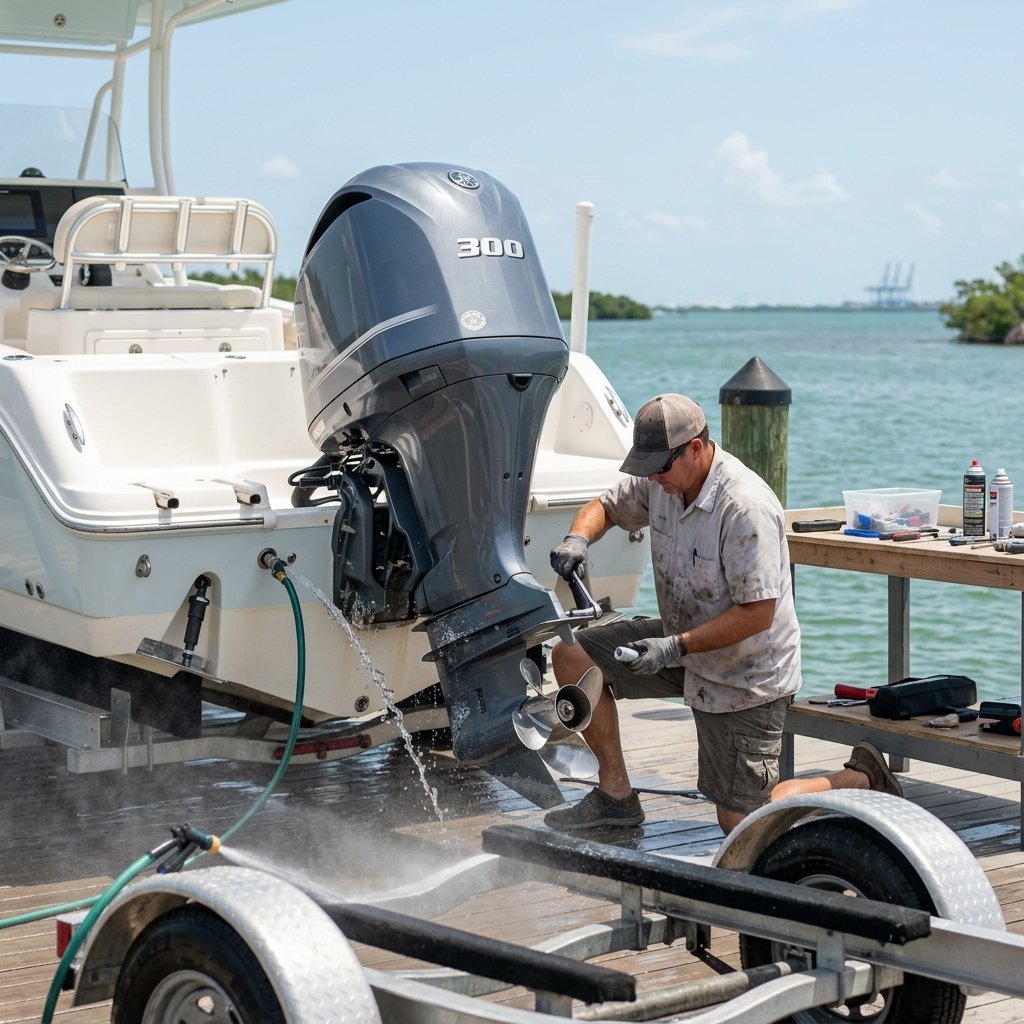
One of the simplest and most effective ways to reduce corrosion is consistent freshwater rinsing after every saltwater outing. While every boat is different, several general principles apply:
- Rinse the exterior: After hauling the boat or returning to the dock, rinse hulls, topsides, hardware, and the exterior of the outboard with low to moderate pressure freshwater. Focus on areas where salt spray accumulates.
- Flush the engine cooling passages: Follow your Yamaha outboard manual for recommended freshwater flushing procedures and duration. Use the manufacturer-approved method only.
- Avoid forcing water into sensitive components: Do not use high-pressure jets near electrical connections, decals, or seals, as this can cause water intrusion.
Regular rinsing helps remove salt deposits that can trap moisture and start or accelerate corrosion on exposed metal parts.
Protecting Yamaha Outboards from Corrosion
Modern Yamaha outboards are designed with corrosion resistance in mind, but they still require thoughtful care to perform reliably in Brevard County waters. Consider the following high-level practices and always review your specific engine manual:
Use and Maintain Sacrificial Anodes
Sacrificial anodes are designed to corrode in place of critical metal components. On Yamaha outboards, these may be located on the lower unit, trim tabs, or other external surfaces.
- Inspect anodes regularly for wear and tight fit.
- Replace anodes when they are significantly consumed, following manufacturer guidance.
- Use anode materials suitable for your typical environment (for example, many coastal boaters use aluminum anodes for mixed salt and brackish water; consult a marine professional for your application).
- Avoid painting or coating anodes, as this prevents them from working properly.
Changes in anode wear patterns can sometimes indicate electrical or bonding issues that may warrant evaluation by a certified technician.
Follow Recommended Corrosion-Protection Procedures
Yamaha publishes maintenance schedules and corrosion-protection recommendations in the owner and service manuals. These often include:
- Engine flushing intervals
- Inspection schedules for brackets, clamps, and mounting bolts
- Guidance on approved corrosion-inhibiting sprays for external components
- Recommendations for off-season or long-term storage
Adhering to these guidelines helps maintain your engine within the conditions it was designed to handle.
Hull, Hardware, and Electrical Corrosion Prevention
Corrosion control extends beyond the outboard. The boat's hull fittings, wiring, and onboard systems all play a role in long-term reliability.
Inspect and Protect Metal Fittings
On both fiberglass and aluminum hulls, metal fittings require routine attention:
- Periodically check cleats, rails, hinges, and fasteners for rust stains, pitting, or looseness.
- Clean light surface corrosion with products intended for marine use, following label instructions.
- Use marine-grade sealants and gaskets where appropriate to help limit water intrusion.
- Avoid mixing dissimilar metals without proper isolation washers or pads when possible.
If you notice severe pitting, cracking, or leaks around through-hull fittings or seacocks, it is advisable to consult a marine technician before operating the vessel.
Support Healthy Electrical Systems
Electrical problems can accelerate corrosion, especially when they create stray current in the water or within metal components. Some general practices include:
- Use marine-grade tinned copper wiring and connectors where replacements are needed.
- Keep battery terminals clean, dry, and properly secured.
- Inspect visible wiring for damage, corrosion, or loose connections.
- Avoid altering bonding systems or grounding arrangements without professional guidance.
Any evidence of overheating wires, repeated breaker trips, or rapid anode loss should be evaluated by a qualified marine electrician or technician.
Trailers and Shore-Side Corrosion Considerations
In Brevard County, trailers are exposed to frequent dunking in saltwater ramps, followed by sun and road use. This combination can quickly degrade steel components if not managed carefully.
- Rinse trailers thoroughly with freshwater after each saltwater launch and retrieval.
- Pay attention to brakes, springs, axles, and couplers for early rust.
- Check trailer lights and connectors for corrosion and moisture intrusion.
- Follow manufacturer recommendations for lubricating moving parts and protecting exposed metal.
Keeping the trailer in good condition supports safer transport and helps protect the boat's hull from unnecessary strain.
Dockside Practices and Storage Habits
Where and how your boat is stored has a significant impact on corrosion rates. In the marinas and canals around Brevard County, consider the following habits:
- When possible, store boats on lifts, trailers, or dry storage to reduce continuous immersion in saltwater.
- If the boat remains in the water, inspect bottom paint, anodes, and underwater metals regularly.
- Use shore power only with properly maintained cords and connections, and follow marina guidelines.
- Keep bilges as dry and clean as practical to limit hidden moisture.
For long periods of non-use, review engine and boat manufacturer guidance on preparing systems for storage in Florida's climate.
Corrosion-Resistant Products and Coatings
There are many products designed to help manage corrosion, including marine waxes, corrosion-inhibiting sprays, and anti-fouling paints. It is important to choose options compatible with Yamaha outboards and your specific hull material.
- Use only coatings and sprays approved by your engine and boat manufacturers.
- Avoid applying anti-fouling paint directly to areas where it is not recommended, such as certain parts of an outboard lower unit.
- Follow all safety instructions on product labels and ensure adequate ventilation when applying coatings.
When in doubt, consult a marine professional before changing paint systems or applying new protective products.
When to Consult a Certified Marine Technician
Some corrosion issues can be monitored and managed with basic care, while others warrant professional evaluation. Consider consulting a Yamaha-certified marine technician if you notice:
- Rapid or uneven anode consumption
- Blistering, peeling, or bubbling paint on lower units or underwater metals
- Visible metal loss, deep pitting, or cracking on structural or steering components
- Unexplained electrical issues occurring alongside physical signs of corrosion
- New noises, vibration, or performance changes from your outboard
A technician can use specialized tools, service information, and testing procedures to help identify underlying causes and recommend appropriate corrective actions.
Building a Preventive Corrosion Plan
Corrosion control is most effective when it is part of a broader maintenance routine instead of a one-time project. Many Brevard County boat owners benefit from creating a simple schedule that includes:
- Freshwater rinsing and engine flushing after each saltwater outing
- Monthly checks of anodes, hardware, and visible wiring
- Seasonal inspection of trailers, steering systems, and through-hulls
- Regular servicing of Yamaha outboards according to the manufacturer schedule
Documenting what you observe over time helps you and your technician notice changes early and make informed maintenance decisions.
Professional Support for Corrosion Management
Operating in Brevard County's saltwater environment places extra demands on every boat system, from Yamaha outboards to trailers and dockside connections. Thoughtful inspection, freshwater rinsing, appropriate coatings, and manufacturer-guided maintenance all contribute to reducing corrosion and supporting long-term reliability.
If you have questions about corrosion on your Yamaha outboard or are unsure how to interpret what you are seeing on your boat, a conversation with a qualified marine technician can be helpful. To discuss inspection or maintenance options with a Yamaha Outboard Master Certified Technician in Satellite Beach, Contact Yamaha Outboard Specialist


