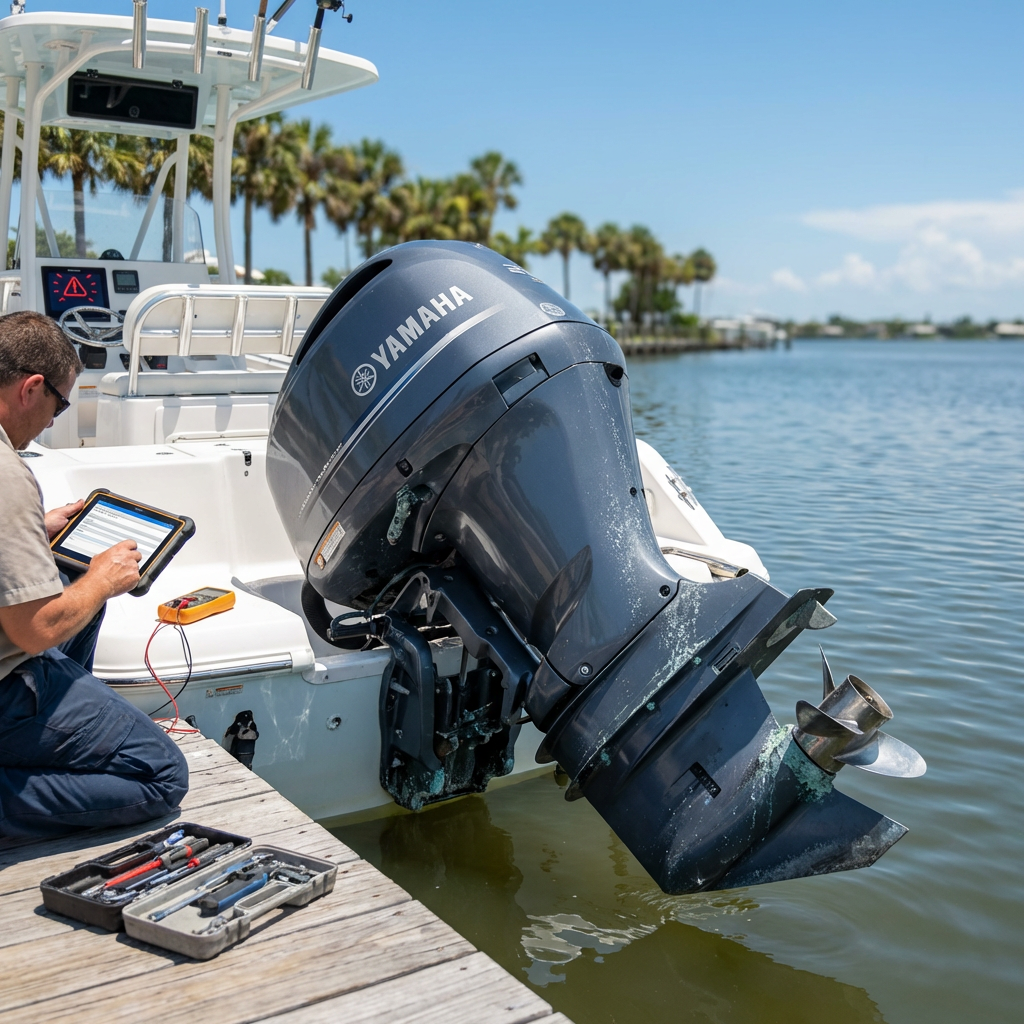
Satellite Beach Boat Owners: Signs It Is Time for Outboard Service
Satellite Beach Boat Owners: Signs It Is Time for Outboard Service
In Satellite Beach and across Brevard County, boats see a mix of saltwater exposure, heat, humidity, and frequent short runs between inlets, sandbars, and nearshore fishing spots. Those conditions are tough on any outboard, even when it is running well. The challenge for many owners is knowing when normal wear becomes a service need. Catching early symptoms can help reduce the chance of a breakdown and can support long-term reliability.
This article covers practical, owner-friendly signs that it may be time to schedule service for your Yamaha outboard (or any modern outboard). The goal is not to troubleshoot on the water or attempt risky repairs, but to help you recognize patterns, document symptoms, and know when professional inspection and diagnostics are appropriate.
Why timely service matters in coastal Florida
Saltwater leaves mineral deposits and accelerates corrosion. Heat and humidity stress electrical connections, fuel quality, and rubber components. Add in trailering vibration and the reality that many boats sit for days or weeks between uses, and you have the perfect setup for small issues to grow quietly.
Routine service is also about creating a baseline: when filters, fluids, spark plugs, and software updates are current, it is easier to spot abnormal behavior. If your engine is maintained on schedule, a new symptom stands out clearly and can often be addressed sooner.
Common signs your outboard is due for service
1) Hard starting, longer cranking, or inconsistent starts
Modern Yamaha outboards typically start quickly when the battery is healthy and the fuel system is in good condition. If you notice the starter cranking longer than usual, intermittent no-start episodes, or a pattern where the engine starts one day and struggles the next, it is a good time to schedule service.
Causes can range from simple maintenance items (battery condition, corroded terminals, aged spark plugs, restricted filters) to fuel quality concerns after storage. Because fuel and electrical systems can involve safety risks, avoid improvising repairs. Instead, document the conditions when it happens (cold start vs warm restart, time since last run, fuel age) and share those details with a technician.
2) Rough idle, stalling, or unstable RPM at low speed
An outboard that suddenly idles rough, stalls when shifting, or hunts up and down at idle may be telling you something changed. While occasional minor variation can occur, repeated rough-idle behavior is not something to ignore, especially if it is new.
In saltwater environments, restricted fuel flow, sensor issues, air leaks, or ignition problems can present as low-speed instability. Professional diagnostics can help confirm whether the issue is fuel delivery, ignition, or engine management related without guesswork.
3) Reduced top-end performance or difficulty getting on plane
If the boat used to plane easily and now feels sluggish, the cause may not be the engine alone. Hull growth, added weight, propeller damage, or changes in load can contribute. Still, persistent loss of power is a strong indicator that a service visit is due.
Performance concerns are best approached systematically: a technician can verify engine health, check for stored fault codes, confirm correct operating RPM range, and inspect prop condition and setup. Avoid running the engine harder to compensate, especially if any alarms occur.
4) Alarms, warning lights, or gauge messages
Any alarm or warning indicator deserves attention. Modern Yamaha systems may alert for overheating, low oil pressure, charging issues, or other engine-management faults. Even if the engine seems to run normally afterward, a warning can indicate a condition that should be verified.
Do not bypass alarms or continue operating with an unresolved warning. Instead, reduce risk by returning safely at a conservative pace if conditions allow and schedule a diagnostic check. Capturing details helps: note the alarm type, when it occurred (idle, cruise, acceleration), water conditions, and whether it repeated.
5) Unusual vibration, rattling, or new noises
Outboards have a normal sound profile, and experienced owners often notice when it changes. New vibration can be caused by prop damage, fishing line around the prop shaft, worn mounts, or issues within the drivetrain. New metallic noises, grinding, or clunking during shifting are especially important to address promptly.
Because drivetrain and propeller issues can become more severe if ignored, it is wise to have abnormal vibration and noise evaluated professionally. If you suspect prop damage, avoid extended operation until it is inspected.
6) Overheating signs or inconsistent cooling behavior
Overheating can show up as an alarm, steam, a hot smell, or a change in how the engine runs. In Florida waters, cooling passages can be affected by sand, silt, salt deposits, or a worn water pump. Cooling system work can involve disassembly and specific procedures, so it is not a good area for experimental fixes.
If you notice repeated temperature-related warnings or symptoms, schedule service. Include details like recent shallow-water operation, whether the issue appears at idle or at speed, and how long after startup it begins.
7) Electrical symptoms: weak cranking, dim electronics, or charging concerns
Salt air can accelerate corrosion at battery terminals, ground connections, and harness plugs. A battery that is aging or undercharged may crank slowly, and low voltage can sometimes lead to odd electronic behavior. If your electronics reset when starting, or you see fluctuating voltage on a gauge, it is worth having the charging and starting system tested.
Because marine electrical systems can involve high current, keep owner actions limited to safe basics like visually inspecting for obvious corrosion and ensuring batteries are secured. Testing and repairs should be handled with proper tools and training.
8) Fuel-related clues: surging, hesitation, or sensitivity after storage
Fuel quality can change over time, especially in humid conditions. If the engine runs fine during one outing but hesitates, surges, or loses power during the next, the fuel supply and filtration system may need attention. Water contamination, restricted filters, or aging hoses can contribute to inconsistent performance.
Instead of guessing, treat fuel symptoms as a prompt for a professional inspection. If the issue is repeatable, note the RPM range and whether it happens under load, at cruise, or during acceleration.
9) Increased fuel consumption or shortened range
If your normal fuel burn seems higher for the same route and load, it can be a sign of engine inefficiency, propeller issues, or hull condition changes. A gradual change over time can be hard to notice, so it helps to track a few baseline numbers, such as typical cruise RPM and speed for a given fuel level and sea state.
When fuel economy changes without an obvious reason, service can help identify whether the engine is reaching proper temperature, running the correct RPM range, and operating without sensor-related compensation.
10) Visible corrosion, salt buildup, leaks, or damaged rigging
A quick visual check often reveals service needs before they become failures. Corrosion on fasteners or brackets, salt buildup around components, cracked rigging grommets, and fluid residue can indicate areas that need attention. Some seepage may be normal depending on component design, but any persistent leak or unusual residue should be inspected.
If you see fuel odor, wetness near fuel components, or any sign of fuel leakage, treat it as a safety issue and have the boat inspected by a qualified marine professional.
Service interval reminders (and why symptoms still matter)
Even when you follow an annual or hour-based maintenance schedule, symptoms can appear between planned services. Likewise, an engine with low hours can still need attention if it has sat with old fuel, been exposed to salt spray, or experienced battery discharge cycles.
High-level items commonly addressed during preventive service may include:
- Engine oil and filter (where applicable) and inspection for abnormal contamination
- Gearcase lubricant check for signs of water intrusion or metal debris
- Water pump condition evaluated based on hours, age, and operating environment
- Fuel system filtration and inspection of lines and fittings for age-related wear
- Battery and charging system testing and corrosion prevention
- Propeller and hardware inspection for damage and proper fit
- Software and fault code scan on applicable Yamaha systems
These items are best handled with manufacturer guidance and the right tools. The key for owners is to schedule service based on both the calendar and what the engine is telling you.
What to record before you call a technician
A little documentation can make diagnostics faster and more accurate. If something feels off, capture the most relevant details while they are fresh:
- Engine model and approximate hours
- When the symptom occurs (cold start, warm restart, idle, cruise, acceleration)
- Whether any alarms or lights appeared and what the gauge displayed
- Fuel details (how old, where purchased, how full the tank was, recent storage time)
- Recent changes (new prop, added accessories, battery replacement, long period of sitting)
- Operating environment (shallow water, heavy chop, long idle time, recent flushing habits)
This information helps a certified technician focus on the most likely systems and verify the concern efficiently.
When it is time to stop using the boat and schedule service
Some symptoms are urgent enough that continued operation may increase risk or damage. Consider scheduling service promptly and avoiding further use if you experience repeated alarms, persistent overheating indications, strong fuel odor, severe vibration, hard shifting, or a sudden and significant loss of power. If you are ever uncertain, it is safer to have the engine inspected before the next trip.
Professional Yamaha-focused service in Satellite Beach
For boat owners who want a clear, diagnostic-first approach, Yamaha Outboard Specialist in Satellite Beach is led by Steven Naeder, a Yamaha Outboard Master Certified Technician. Service is focused on Yamaha outboard repair, preventive maintenance, and reliability-centered inspections appropriate for coastal Florida use.
If you are noticing any of the signs above or you simply want to baseline your engine before the busy season, schedule a service consultation and share the symptoms you have observed. Contact Yamaha Outboard Specialist


