Warning Signs of Lower Unit Trouble in an Outboard
Warning Signs of Lower Unit Trouble in an Outboard
The lower unit (gearcase) is the portion of an outboard below the midsection that houses the gears, bearings, seals, and propeller shaft components that transfer engine power to the propeller. Because it operates underwater and under load, it is exposed to impacts, fishing line, sand, heat, and saltwater corrosion. Catching early warning signs matters: many lower unit failures start small (a seal begins to leak, a bearing starts to wear, a prop is slightly damaged) and progress if the root cause is not addressed.
This article covers common symptoms of lower unit trouble, what they can suggest, and practical, safety-focused steps boat owners can take to reduce risk. It is not a repair guide for internal gearcase work. If you suspect a problem, consider limiting use and arranging a professional inspection before the issue becomes more difficult to diagnose.
Why the lower unit is a common reliability hotspot
Lower units are built to handle substantial torque, but they rely on clean gear oil, proper seal integrity, and correct alignment of rotating parts. In Florida coastal conditions, saltwater, heat, and frequent trailering can add stress. Small problems can be overlooked because the outboard may still start and run normally, even while the gearcase is being damaged.
Common contributors to lower unit issues include:
- Seal damage from fishing line, impacts, or corrosion that allows water intrusion.
- Propeller damage that adds vibration and load to shafts and bearings.
- Gear oil breakdown from age, contamination, or improper servicing.
- Impact events (striking bottom, debris, or a dock) that bend components or crack housings.
- Incorrect installation of parts after prior service, leading to leaks or misalignment.
Key warning signs to watch for
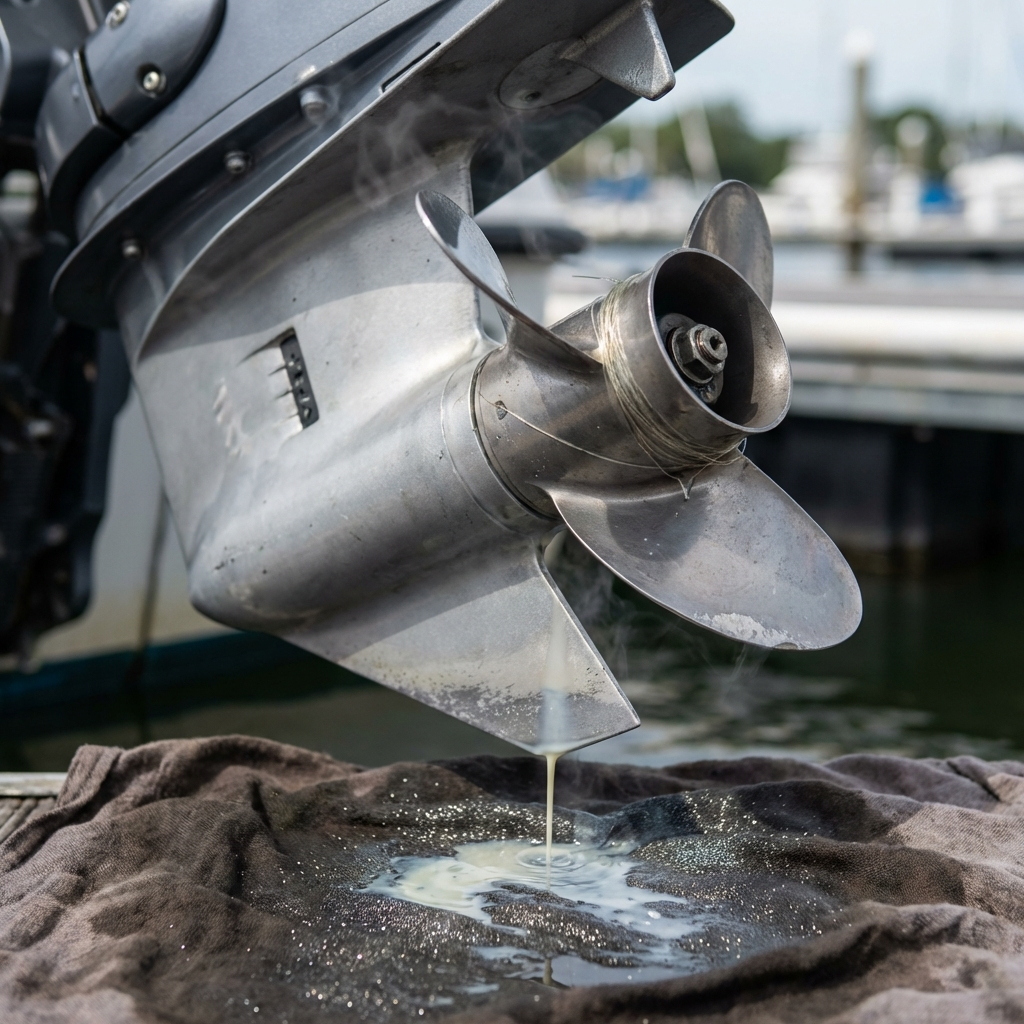
1) Milky, gray, or foamy gear oil
Gear oil should generally look like clean oil (often dark amber or honey-colored, depending on product and hours). If it appears milky or gray, that often indicates water contamination. Water in the gearcase can reduce lubrication, increase corrosion, and accelerate bearing and gear wear.
What it may indicate:
- Prop shaft seal leakage (sometimes related to fishing line or seal wear)
- Drive shaft seal leakage
- Shift shaft seal leakage
- Housing damage from an impact or corrosion
If you notice milky gear oil, it is typically a sign to schedule service promptly. A technician may pressure and vacuum test the gearcase to locate leaks and confirm seal integrity.
2) Metal flakes or glitter in the gear oil
Small amounts of fine metallic sheen can sometimes be seen depending on break-in and hours, but visible flakes, chunks, or heavy metal shimmer are a red flag. Metal in the oil suggests internal wear of gears or bearings. Continued operation can turn a manageable issue into a major failure.
What it may indicate:
- Bearing wear or pitting
- Gear tooth wear or chipping
- Inadequate lubrication due to low oil level or contaminated oil
A professional evaluation may include draining and inspecting oil, checking magnetic drain plugs (if equipped), and assessing for abnormal noise and endplay.
3) Burning smell near the gearcase or unusually hot gearcase
After normal use, the gearcase will be warm. However, an unusually hot gearcase or a burning odor can suggest excess friction, low gear oil, or internal damage. Because temperature can vary with load, water temperature, and run time, it is most meaningful when it is noticeably different from your normal baseline.
What it may indicate:
- Low gear oil level due to leaks
- Water contamination causing poor lubrication
- Bearing failure or gear damage creating friction
Avoid attempting on-the-water diagnosis that requires hands near the propeller or gearcase while the engine is running. If you suspect overheating at the gearcase, reduce risk by returning at low load and arranging inspection.
4) New vibration, especially tied to speed or trim
Vibration can originate from the propeller, prop shaft, engine mounts, or hull issues, but the lower unit is a frequent source. A prop that is bent or missing material can create vibration that stresses the gearcase. Fishing line on the prop shaft can also contribute to seal damage and vibration.
What it may indicate:
- Damaged propeller or hub problems
- Prop shaft runout (bent shaft) after an impact
- Bearing wear inside the gearcase
If vibration appears suddenly after you hit something, consider the trip a signal to inspect the prop and gearcase before further high-load use.
5) Difficulty shifting, grinding, or inconsistent engagement
Shifting should feel consistent and positive. If you notice grinding noises, delayed engagement into gear, or the engine feels like it is slipping out of gear, treat it as a serious warning sign. Some causes are external (cable adjustment or linkage wear), while others can be internal to the gearcase.
What it may indicate:
- Shift cable or linkage issues (external)
- Clutch dog wear or gear wear (internal)
- Shift shaft seal issues associated with water intrusion and corrosion
Because mis-shifting can accelerate gear wear, it is wise to have it evaluated before it becomes intermittent or fails under load.
6) Propeller-related clues: line, dings, or repeated hub issues
The propeller is part of the lower unit system. A small ding can sometimes be dressed by a prop shop, but more significant damage can create balance problems and transmit vibration to bearings and seals. Fishing line is a common seal killer: it can wrap tightly behind the prop and cut into the prop shaft seal.
Good owner habits include visually checking for line and damage before and after trips, especially after shallow water operation or heavy vegetation.
7) Oil leaks or residue around seals and fasteners
Gear oil leaks can show up as dark residue around the prop shaft area, the drain and vent screws, or along seam lines. Some residue can be old oil from prior service, but fresh, wet oil is worth investigating.
What it may indicate:
- Damaged or hardened seals
- Improperly sealed drain/vent screw gaskets
- Hairline cracks or corrosion around sealing surfaces
Because low oil level can quickly escalate internal wear, any suspected leak should be checked sooner rather than later.
8) Unusual noises: whining, rumbling, or knocking that changes with gear or speed
Lower unit problems often sound like a whine that changes with speed, a rumble that increases under load, or a knocking sensation. Noise patterns can help narrow down whether the issue is in the prop, bearings, or gears, but confirming the cause typically requires an inspection.
Important note: not all noises come from the lower unit. Exhaust, loose rigging, and hull slap can mimic gearcase sounds, which is why professional diagnostics can save time and prevent unnecessary parts replacement.
What to do if you suspect lower unit trouble
Safety and preventing additional damage are the priorities. If a warning sign appears, consider these conservative steps:
- Reduce load and avoid high-RPM operation until the issue is evaluated.
- Document symptoms: when it happens (speed, trim, turning, after impact), what you hear/feel, and any recent service history.
- Perform only low-risk visual checks with the engine off: look for fishing line at the prop area, obvious prop damage, and external oil residue.
- Do not bypass alarms or continue operating with known mechanical issues.
For suspected water intrusion or metal in the oil, professional assessment is especially important because internal damage can progress even if the engine otherwise runs fine.
Preventive habits that reduce lower unit risk
Lower unit failures are not always preventable, but consistent maintenance and inspection reduce the likelihood of surprise problems. Practical habits include:
- Regular gear oil service at intervals consistent with your Yamaha outboard maintenance schedule and usage patterns.
- Prop inspection for dings, bends, and hub wear, and prompt repair when damage is found.
- Line checks after fishing or running through weeds, since line can damage seals.
- Post-impact caution: if you strike bottom or debris, treat it as a trigger for inspection even if performance seems normal.
- Corrosion awareness in saltwater environments: rinse practices and periodic professional inspections help catch developing issues.
What a technician may check during diagnostics
Lower unit diagnostics are most effective when they combine symptom history with objective tests. Depending on the model and symptoms, a certified technician may:
- Inspect and sample gear oil for contamination and metal
- Perform gearcase pressure and vacuum testing to verify seal integrity
- Check prop shaft condition and runout indicators
- Inspect prop, hub, and thrust hardware condition
- Verify shift linkage and cable function before suspecting internal damage
- Evaluate for abnormal noise patterns during controlled testing
These checks help determine whether the issue is external and minor, or internal and requiring more involved service.
Lower unit warning signs: quick reference list
- Milky or gray gear oil
- Metal flakes or heavy metallic sheen in oil
- Gearcase unusually hot or burning smell
- New vibration tied to speed or trim
- Hard shifting, grinding, or inconsistent engagement
- Fresh gear oil leaks or residue
- Whining, rumbling, or knocking that changes with speed
- Prop damage or fishing line around the prop shaft
If you are in Brevard County and want a professional evaluation of a suspected lower unit concern on a Yamaha outboard, Yamaha Outboard Specialist in Satellite Beach can help with diagnostics and maintenance planning. To schedule an inspection, Contact Yamaha Outboard Specialist


