When to Suspect Fuel Contamination in Your Boat
When to Suspect Fuel Contamination in Your Boat
Fuel quality has a direct effect on how reliably your boat runs, especially with modern Yamaha outboards that depend on clean, stable fuel to protect sensitive components. In Florida’s heat and humidity, fuel contamination is a common issue that can quietly develop over time. Recognizing the early signs and knowing when to stop troubleshooting and call a certified marine technician can help reduce the risk of more extensive damage.
What Is Fuel Contamination?
Fuel contamination is any unwanted substance in your gasoline or diesel that changes how it burns or flows. Even minor contamination can cause performance problems in an outboard, and more severe contamination can lead to stalling or a no-start condition.
Common forms of fuel contamination in boats include:
- Water intrusion from condensation, rainwater, or leaking deck fills
- Ethanol-related phase separation, where water and alcohol separate from gasoline
- Rust and corrosion particles from metal tanks, fittings, or aging components
- Dirt and debris introduced during fueling or from deteriorating hoses
- Biological growth (often called “algae”) in diesel or long-stored fuel
Not every running problem is caused by fuel, but many intermittent or hard-to-explain issues are related to fuel quality or restriction. Understanding the symptoms helps you know what to report to a technician and when to avoid further operation.
Why Fuel Contamination Matters for Yamaha Outboards
Yamaha outboards use precise fuel delivery systems, including high-pressure pumps, injectors, and fine filters designed for clean, dry fuel. Contamination can affect these components in several ways:
- Water can lead to corrosion inside pumps and injectors and disrupt proper combustion.
- Solid particles can clog filters and screens, restricting flow and causing lean running.
- Ethanol-related separation can reduce octane and create a water-heavy layer that does not burn as intended.
- Varnish and deposits from old fuel can cause sticking in injectors and internal passages.
Because these systems are intricate, attempting in-depth fuel system repairs without the right tools and training can create additional risks. A high-level awareness of symptoms and safe inspection practices is usually the best role for a boat owner, with detailed diagnosis handled by a qualified marine technician.
Early Signs of Possible Fuel Contamination
Fuel problems often start subtly. Paying attention to changes in how your Yamaha outboard sounds and responds can help identify an issue before it becomes more serious. The following symptoms may indicate fuel contamination and warrant further professional evaluation.
1. Hard Starting or Extended Cranking
If your engine cranks longer than usual before firing, especially after sitting for a week or more, fuel quality may be a factor. While batteries, ignition, and other systems can also cause hard starting, contamination can lead to:
- Inconsistent fuel delivery at startup
- Water-rich fuel reaching the cylinders
- Phase-separated fuel that does not ignite as expected
If you notice hard starting combined with other fuel-related signs (such as rough idle or sputtering), it is wise to pause on repeated start attempts and consult a technician.
2. Rough Idle, Hesitation, or Sputtering
A smooth-running Yamaha outboard should idle steadily once warmed up. Rough idle, hesitation when shifting into gear, or sputtering as you advance the throttle can indicate that the engine is not receiving consistent, clean fuel. Contaminants or water can pass through the system in small bursts, leading to:
- Momentary loss of power or stumble on acceleration
- Fluctuating RPMs at idle
- Occasional misfires or vibration
These symptoms can appear more frequently after hitting boat wakes or rough water, as fuel in the tank is agitated and any separated layers are disturbed.
3. Loss of Power Under Load
One of the more noticeable signs of a possible fuel issue is reduced power when you try to get on plane or run at cruising speed. If the engine:
- Feels weak or sluggish as you throttle up
- Will not reach normal wide-open throttle RPM
- Surges up and down in speed without moving the throttle
there may be flow restriction or inconsistent fuel delivery. Clogged filters, debris, or water in the fuel can all contribute. Because loss of power under load may also have other causes, further inspection by a marine technician is recommended before continuing long-distance operation.
4. Frequent or Unexplained Stalling
Stalling as you shift into gear, come off plane, or idle through a no-wake zone can be more than an inconvenience. If the engine stalls repeatedly or is difficult to restart, there may be a fuel-related concern such as:
- Water reaching the engine in larger amounts
- Debris intermittently blocking filters or screens
- Phase-separated fuel layers moving within the tank
Repeated stalling in busy channels or inlets can create safety risks. In these situations, it is generally safer to return to port carefully, if possible, and arrange for professional diagnosis before your next outing.
5. Unusual Smells, Appearance, or Excessive Filter Debris
When performing basic visual checks within your comfort level, pay attention to how your fuel looks and smells in transparent bowls or sight glasses. Potential warning signs include:
- Cloudy or milky appearance in gasoline
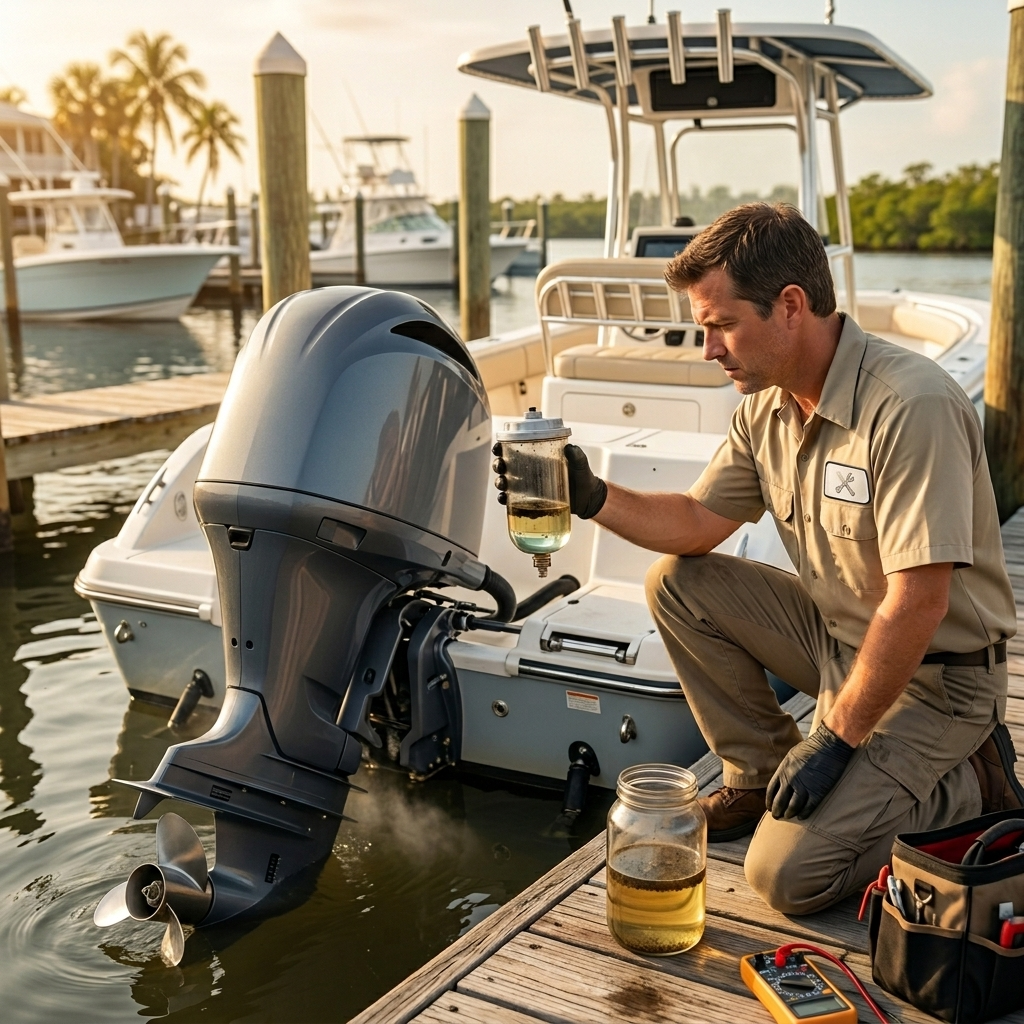
- Visible water layer at the bottom of a clear fuel/water separator bowl
- Strong sour, varnish-like, or unusually sharp odors
- Frequent need to replace primary fuel/water separator elements that appear heavily contaminated
Any visible water or debris is a strong indicator that the fuel system needs more thorough inspection and service by a qualified technician. Avoid draining fuel lines or tanks on your own unless you are following proper safety practices and local environmental regulations.
Common Causes of Fuel Contamination in Florida Conditions
Boating along the Florida coast, including Brevard County, exposes fuel systems to conditions that can accelerate contamination. Some typical contributors include:
- High humidity and temperature swings, which encourage tank condensation
- Short runs with long storage periods, allowing fuel to age and separate
- Deck fill leaks that admit rainwater or washdown spray
- Unfiltered fuel sources or refueling in windy, sandy conditions
- Older hoses and components that can break down internally
Regular inspection, high-quality fuel, and correct storage practices help limit these risks, but even careful owners can encounter fuel contamination over the life of a boat.
High-Level Checks You Can Perform Safely
Without disassembling the fuel system or working with pressurized components, there are a few cautious, high-level checks that many boat owners can perform. Always follow your Yamaha owner’s manual and observe basic safety precautions around fuel and ignition sources.
Visual Inspection Around the Fuel System
With the engine off and the battery switch in a safe position per your boat’s instructions, you may:
- Look for fuel odors around the boat that persist after ventilation
- Check for obvious leaks, wet spots, or staining near the tank, hoses, or primer bulb
- Inspect hose routing for kinks, sharp bends, or abrasion points
- Confirm that the fuel tank vent is not visibly blocked by debris or insect nests
If you see or smell fuel leaks, do not attempt to start the engine. Ventilate the area and contact a marine service professional.
Monitoring Fuel/Water Separators
Many boats have an external fuel/water separator with a clear bowl or easily removable element. Following the manufacturer’s recommendations, you can:
- Check for visible water or heavy debris in a clear bowl while the engine is off
- Note the condition of the element when it is changed by you or a technician
Any sign of frequent water accumulation or heavy contamination should be mentioned to your marine technician so they can look for the source, such as deck fill issues or tank vent problems.
When to Stop Troubleshooting and Call a Professional
Because fuel and ignition systems can be hazardous when handled improperly, it is important to recognize the limits of safe, do-it-yourself inspection. Consider contacting a certified marine technician for diagnosis if you observe any of the following:
- Repeated hard starting combined with rough running or stalling
- Noticeable loss of power, surging, or inability to reach customary RPM
- Visible water, rust, or debris in fuel filters or bowls
- Strong, unusual fuel odors or suspected leaks
- Long-term storage fuel that was not stabilized or properly managed
A professional can perform controlled fuel sampling, pressure and flow tests, and system cleaning using appropriate equipment and procedures. This helps protect high-value components such as fuel injectors, high-pressure pumps, and internal engine surfaces.
Preventive Habits to Reduce Fuel Contamination Risk
While no routine can completely eliminate the chance of contamination, a few practical habits can lower the risk:
- Use fuel from reputable, high-turnover sources when possible.
- Follow Yamaha guidelines for fuel stabilizers and ethanol content.
- Keep deck fills and gaskets in good condition to limit water intrusion.
- Have fuel/water separators serviced on the schedule recommended for your usage and environment.
- Operate the boat regularly during the season so fuel does not sit unused for extended periods.
- Discuss storage plans with a marine technician before extended layup.
These steps, combined with routine inspections, provide useful information to your service provider and support more consistent engine operation over time.
Professional Support for Suspected Fuel Contamination
If you suspect fuel contamination in your boat, avoid extended running or repeated restart attempts that could worsen internal wear. Instead, document the symptoms you are experiencing, including how long the boat sat, where you last fueled, and any changes you observed in performance or fuel appearance. Sharing these details with a marine technician can assist in an efficient diagnosis.
In the Brevard County area, Yamaha outboard owners often benefit from working with a Yamaha Outboard Master Certified Technician who is familiar with local conditions, fuel quality concerns, and model-specific recommendations. A professional can evaluate the entire fuel system, from the tank through the filters and injectors, and advise on the most appropriate next steps based on your specific situation and manufacturer guidance.
If you have questions about fuel-related symptoms, or you would like to schedule an inspection for your Yamaha outboard, you can reach out for professional assistance. Contact Yamaha Outboard Specialist


